

I wrote this issue of The Waterproof Notebook while sitting on the bank of the Kasilof River in Alaska, watching my husband fish for salmon. Eddie prefers experiences over gifts. So I left my waders in the truck and carried a net instead of a rod. I wanted him to catch his first sockeye on this river and this day.
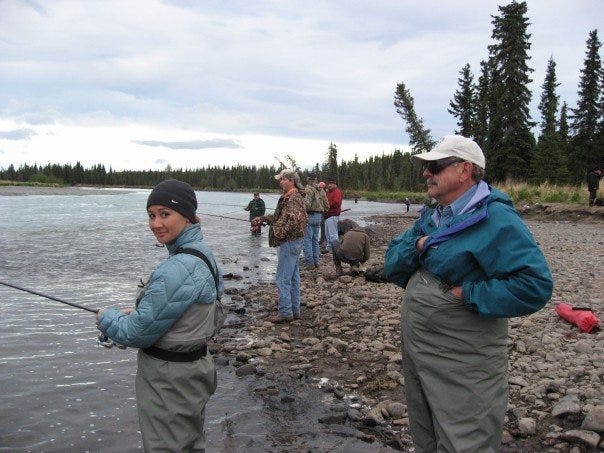
Nineteen years ago this month we fished the Kasilof with my parents. We didn’t know it then, but it would be our last big family fishing trip. I was pregnant. Dad had cancer.
On our weeklong quest to catch a king salmon, I fished harder than I’ve ever fished. In an increasingly comical parade of blunders, I failed. Here’s the great thing about being a writer: The worse things go, the better the story.
But I wasn’t working on a story—or at least I didn’t know it. I was aspiring to be a narrative author. I wanted to write true stories that read like good fiction. Stories laced with tension and meaning—based on verifiable facts.
To develop my craft, I carried a pocket-sized notebook for gathering thread—details, bits of dialogue, character sketches—the key ingredients of scenes. Every night, I’d use that thread to practice writing scenes in my journal. It wasn’t for publication. It was skill building. Deliberate practice. Like a basketball player lobbing free-throws alone in the gym.
Eight years later, in 2015, Southwest magazine editor JK Nickell put out a call for pitches: “We’re looking for stories about fishing and time.” I had never written much about fishing, but I started mining my journals.
My Alaska notebook yielded heaps of tailings and a few gold nuggets. The pay dirt: a scene on the Kasilof River bank. It had all the key narrative elements: characters, dialogue, action. Conflict and resolution. Small and essential concrete details that would have been lost to memory.
Those bits comprised the opening scene of The King of Tides, a braided narrative that’s taught at some high schools and colleges. When I spoke to one class over Zoom, a student questioned the source of my in-scene dialogue. How could one possibly remember what strangers said eight years before?
I ran to my notebook archives and dug out my old Alaska journal. I opened it to a page dated Friday, June 8, and showed it to the class on Zoom. I told them how in-scene dialogue is the secret sauce of narratives, and that memory is highly perishable so it pays to jot dialogue down as soon as you hear something you think might be of use.
(**In a bonus post for paid subscribers, I’ll share the raw alongside the published story and geek out about process.**)
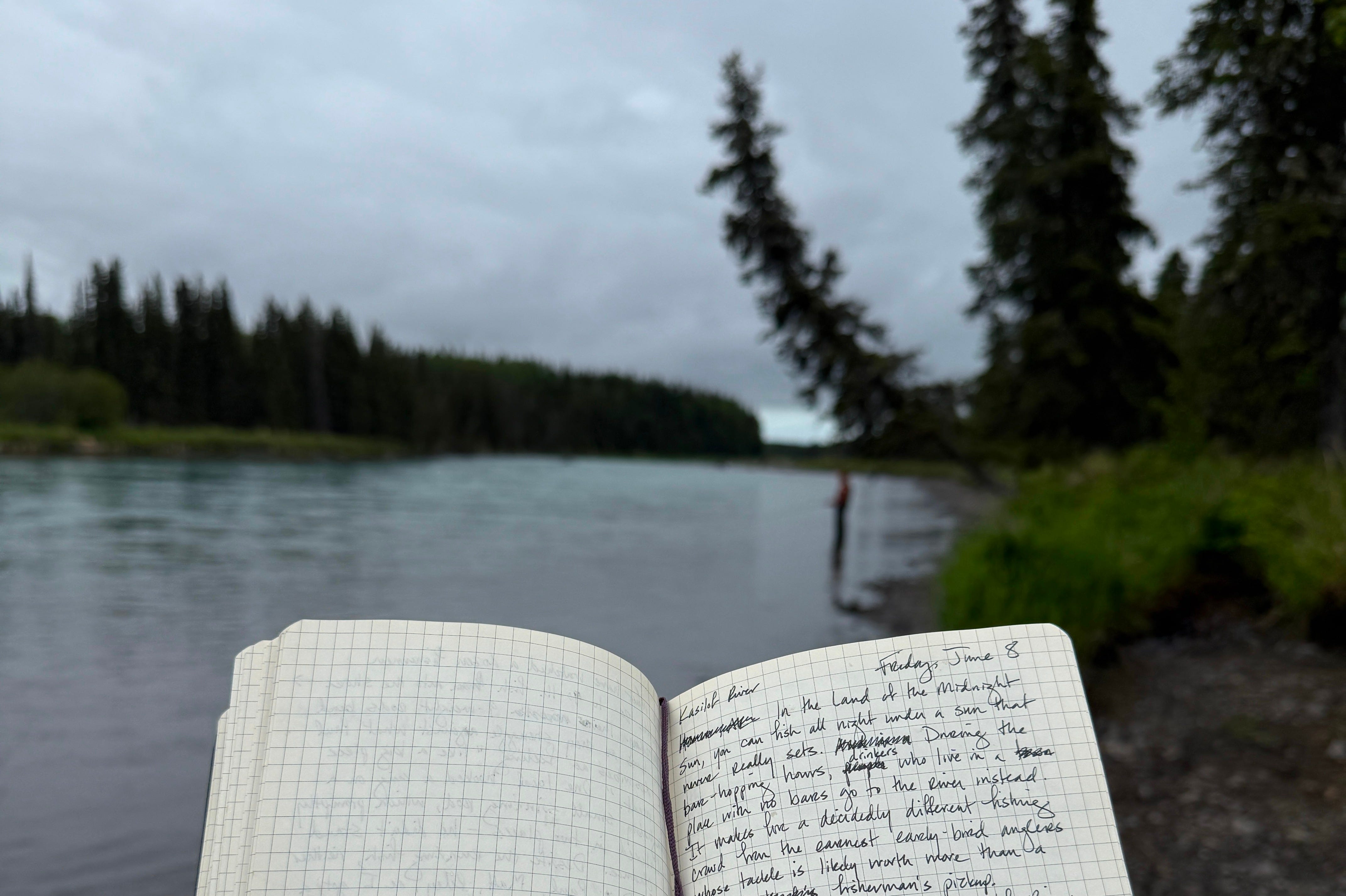
This morning, on our way to the river, I stuffed that 19-year-old notebook into my backpack. As my husband fished for sockeye, I stood in the river behind him, just outside of his casting zone, and read the entry aloud.
It was a bittersweet moment for both of us. My dad has been gone almost as long as our son has been alive. This is my husband’s first Father’s Day away from our boy.
Austin, who is now 18, is also fishing for salmon in Alaska. Off the grid, more than 200 miles east of us, he’s working as a commercial fisherman on a salmon boat in Bristol Bay. I had planned to take him to Alaska after graduation so he could witness abundance. He decided to go on his own.
Shortly after I finished reading the pre-Austin entry from my journal, Eddie hooked into a fish. As the salmon water-walked across the Kasilof, I whipped out my phone to film it. But I also needed to net it. In case you don’t know: juggling a massive net and an iPhone in a swiftly moving river is a really bad idea.
You’ll have to watch this little reel to see how the story ends.
What’s New
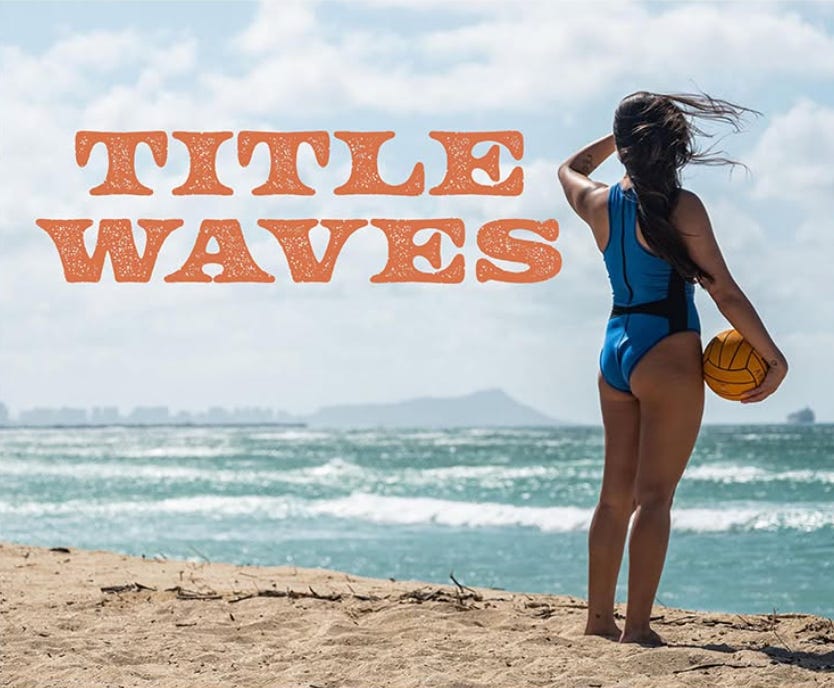
A story idea brought to me by Story Bureau and Long Lead, Title Waves is a 9,000-word braided narrative starring two Hawaiian women born a half-century apart fighting for equality. One is a high school girl who just wanted to be treated fairly. The other was the first woman of color elected to Congress. Both changed the game for generations of girls and women who followed. In the six months of reporting and writing this story, I learned the depths of my own ignorance about how women’s rights are legally codified and enforced. I hope you’ll take time to read it and understand why it’s essential to know and fight for your rights. More on this in a future issue of The Waterproof Notebook.
What’s Next
I bought a one-way ticket to Alaska, where I’ll spend the summer looking for stories and maybe some seasonal job that doesn’t involve sitting in a chair and staring at a screen. (Suggestions? Contacts? Please email me!) This fall, I’ll be teaching two outdoorsy writing workshops in some of the most stunning wild places in Idaho. If you’re interested, now’s the time to inquire — spots are filling up!
September 18-22: Whitewater Writing Retreat — Middle Fork Salmon River, Idaho
In partnership with Middle Fork Rapid Transit, Pulitzer Prize-winning writer Mark Warren and I will be leading a writing retreat on 70 miles of a Wild and Scenic River coursing through Idaho’s River of No Return Wilderness. This river is world-famous among whitewater rafters, but you need no paddling skills to experience it with professional guides who cook your meals, pitch your tent, and navigate the rapids. (More details coming soon. Email me with questions.)
September 23-26: Sawtooth Writing Retreat — Ketchum, Idaho
Elevate your writing under the stars in the mountains that inspired Hemingway. Based at a rustic outdoor camp in Idaho’s Sawtooth mountains, this 4-day writing retreat blends quiet time in an International Dark Skies Reserve with a menu of workshops for writers of all genres and levels. I’ll be teaching on a team of instructors including Paul Bogard (author of The End of Night) and former Esquire editor Mark Warren.
Between the Lines: Reporting in Alaska
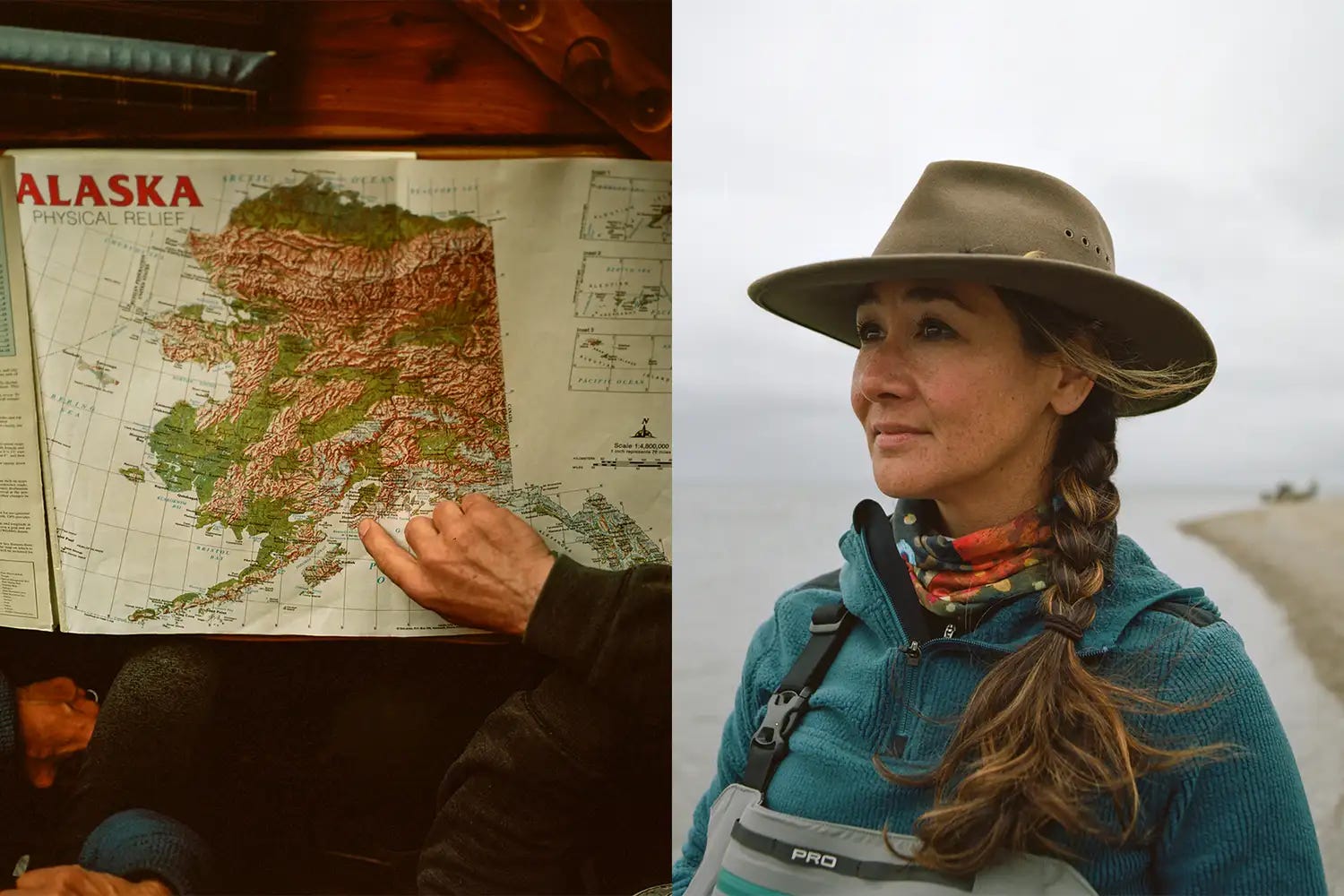
Two years ago, I realized I needed to get back to Alaska. Eight years into researching a book about salmon, it was clear the story needed to end where it began: 19 years ago, on that fishing trip with my father. I wanted to bring my son to Alaska so he could witness nature’s abundance in Bristol Bay, the world’s last stronghold of wild, sustainable salmon runs.
But traveling in Alaska is complicated. Bristol Bay is way off the grid in a remote and roadless wilderness accessible only by bush plane or boat. I needed to get my boots on the ground before bringing my son.
To subsidize my research—and build a platform for the book—I pitched two Alaska salmon stories to two different national magazines: Food & Wine and Travel & Leisure. Because they’re owned by the same parent company (Hearst) these sister titles were open to the idea and could benefit the sharing of travel costs.
For the Food & Wine story, “Out of the Wild,” I followed a sockeye salmon from net to plate through a complicated supply chain. (More on this in a minute.) For the Travel & Leisure story, “River of Dreams,” I tried to catch the king salmon I failed to catch with my father.
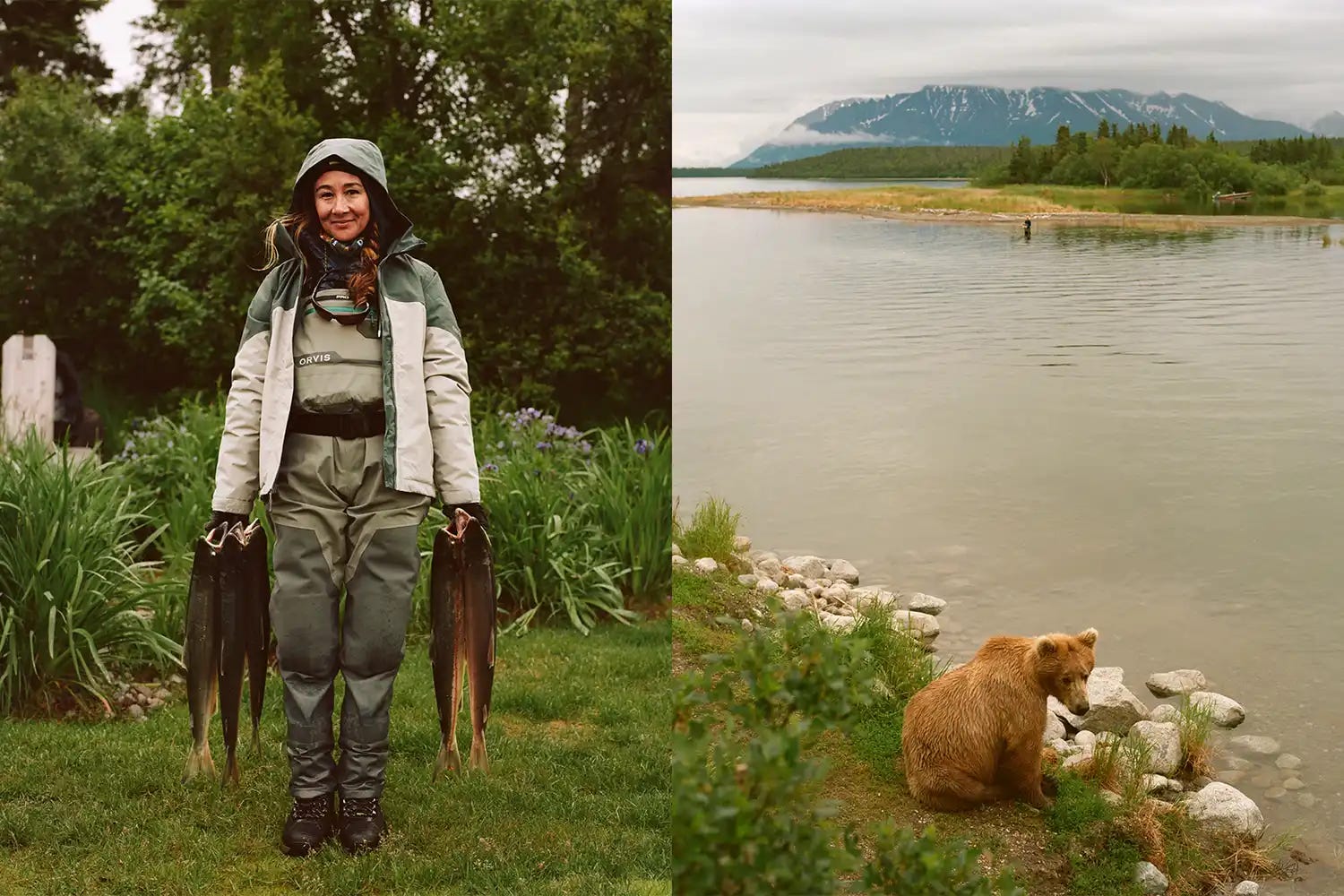
I would take no fewer than 10 airplanes, 2 helicopters, and 7 boats to report both stories over 16 days. With support from Alaska Seafood Marketing Institute and Travel Alaska, which helped with logistical planning and the cost of flights (but did not impose editorial control), I was able to conduct research a freelance writer could not otherwise afford without grants or outside funding. (The travel alone would have cost more than I made from selling both stories.)
I amassed more than 150 human sources and learned more than I could ever possibly glean from reporting remotely. Talk all you want about AI but it will never replace the experience of sharing an airplane row with commercial fishermen who say that after picking fish from a gill net all day, you should sleep with your hands taped flat to a board so they don’t seize into claws.
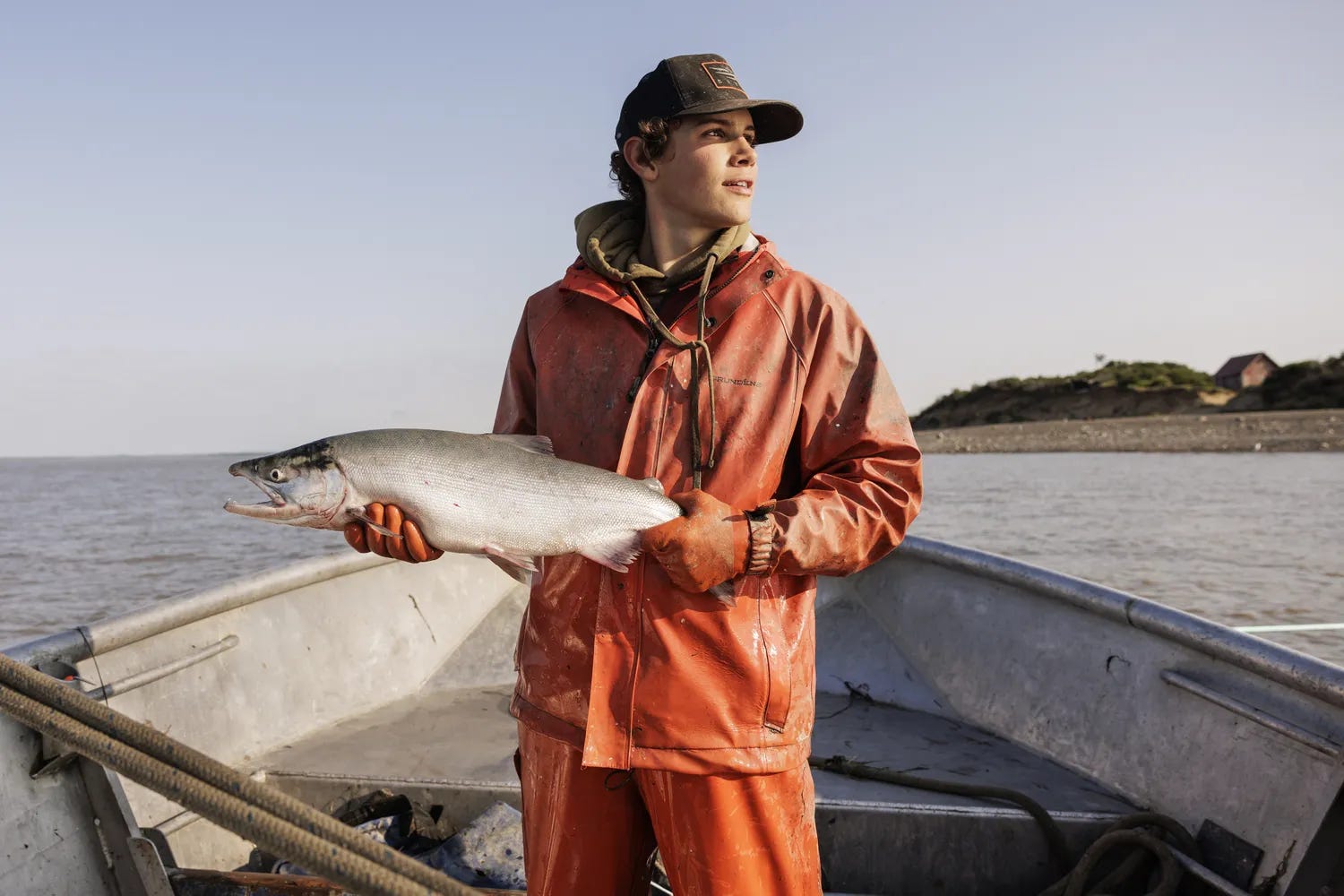
Stories like this don’t happen without a strong editorial team. My feature editors, Karen Shimizu at Food & Wine and Liz Cantrell at Travel & Leisure, were open to this collaborative arrangement, and to funding additional travel expenses that helped pay for guide tips, rental cars, and other incidentals.
Magazine stories land flat without elevated imagery. The T&L story was brought to life by Brian Adams, an Anchorage-based photographer who shot medium-format film. The F&W story was elevated by Corey Arnold, a National Geographic photographer AND the captain of a salmon boat called the Baby Seal. He hosted me on his boat at Graveyard Point to witness the gritty life of Alaska fishermen.
Parting Shot
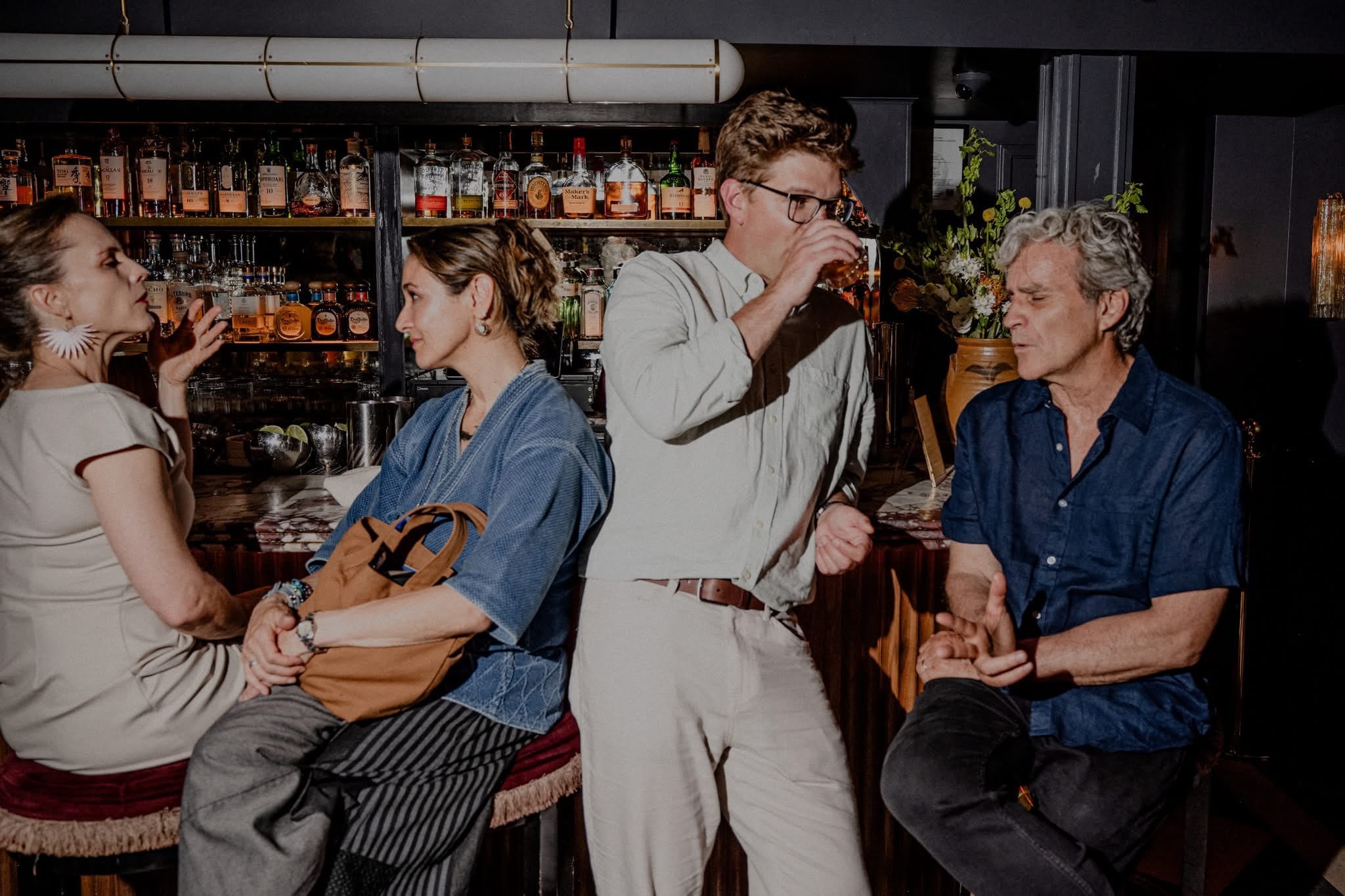
In May I traveled to NYC to attend the American Society of Magazine Editors conference and the National Magazine Awards. My Food & Wine feature “Out of the Wild” was nominated for an Ellie. It’s a huge, intimidating honor to even be nominated, but to receive the award from an old friend and colleague, Sid Evans (my former boss’s boss at Southern Living) was extra special. One of my favorite moments was hanging out at the “Print Ain’t Dead” after-party hosted by Mountain Gazette at The Mulberry in SoHo. I was worried about feeling out of my element in the big city, but there I was, talking about mountain biking with Mountain Gazette’s Kim Stravers. We then drunk-dialed our mutual friend Brice Minnigh, former editor of BIKE and Freehub, who joined the party via Facetime. This photo, shot by Julia Khoroshilov (who also shot the Tony Awards) feels like a spread in Esquire. (Yes, that’s the one-and-only Tom Junod chatting with Mountain Gazette editor Mike Rogge.)
“Come here, fish.” Kim Cross, the fish whisperer. Beautifully told, as always. A huge congrats on big win! I look forward to floating with you in September.
What a chronicle of amazing adventures! Congratulations on your one way ticket to Alaska 💫