

The writing life can get lonely. If you don’t work in a newsroom, on staff at a publication, or live in New York, you may not have a built-in literary community. In my experience, that’s one of the two most important things a writer needs to thrive. (The other: Big blocks of time to write without interruption. More on that in a future issue.)
My literary community in Boise is rich in poets and fiction writers, but I know very few Idaho writers working in longform narrative nonfiction / literary journalism. So I try to reach out at least once a quarter to a writer whose work I admire, and invite them to a “coffee date” on Zoom. There’s usually no agenda, other than a meet-n-greet and a conversation about the writing life.
My most recent conversation began on Substack, in a comments thread. That’s how I connected (or rather reconnected) with Ben Guest, a memoir writer who also works as a professional book coach, ghostwriter, and documentary filmmaker.
Ben and I both had a vague feeling that we had spoken before. On Zoom, we figured out when. A few years ago, I was working on 8600 FT, a feature-length documentary, and I reached out to Ben to chat about the mental skills athletes use to perform under pressure—a theme in my film and in Ben’s memoir, Zen and the Art of Coaching Basketball: Memoir of a Namibian Odyssey.
This time, I had a different question for Ben: In memoir writing, where’s the line between vulnerability and narcissism? How do you write about yourself with “interiority” without making the story “all about you”?
That’s one of my biggest challenges with with my next book. It’s not a memoir. It’s a first-person quest that unfolds over eight years of immersive reporting. But I’m a central character in the narrative, and the story requires memoir-ish flashbacks to pivotal moments from my past. I’m struggling to write with the level of vulnerability memoir demands, without feeling like I’m navel gazing.
Don’t make it all about you, my inner critic whispers. Who cares about you and your life?
Ben recently launched a Substack newsletter called How to Write a Memoir. Subscribe for free to read his accessible, actionable tips. I found them very useful.
At the bottom of this issue — a bonus for paid subscribers — is an edited version of our conversation, with insights I hope will be helpful to you if you’re writing about your own life, plus links to additional memoir resources.
What’s New
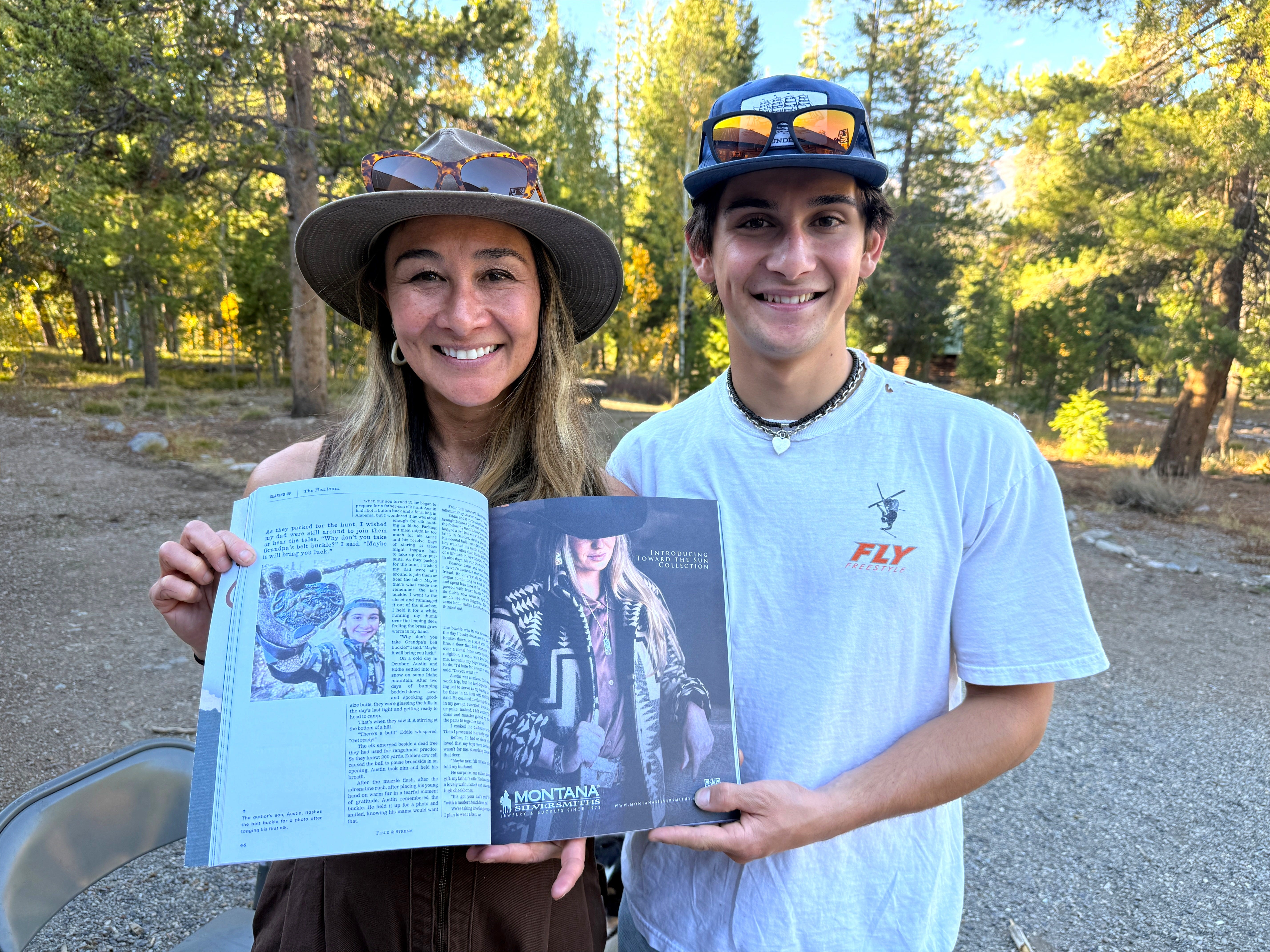
The Talisman (Field & Stream)
An unexpected item left behind in a box of treasures turns out to be a good-luck charm in the backcountry. Find it in The Danger Issue, and check out the gorgeous redesign of this 155-year-old print magazine. (Black Friday sale: 20% off - $36/year for four oversize print issues.)Robin Givhan on the elements of style (Nieman Storyboard)
The only fashion critic ever to win the Pulitzer Prize for criticism, former Washington Post writer Robin Givhan shares her approach to style as a lens through which to examine culture, power, and personality.Annotation: Cold Missouri Waters (Nieman Storyboard)
In a nonfiction song about a wildfire, songwriter James Keelaghan narrates — in 384 words — a tragic story that took Norman Maclean a whole book to tell.Title Waves (Long Lead)
This longform narrative about high school girls who filed a game-changing Title IX lawsuit in Hawaii was awarded two bronze Anthem Awards.Out of the Wild (Food & Wine)
The net-to-plate salmon story has been named a finalist for an International Association of Culinary Professionals Award. This story was awarded a National Magazine Award by the American Society of Magazine Editors and a silver Lowell Thomas Award from the Society of American Travel Writers.

What’s Next
Registration is open for my feature writing class at Harvard Extension School, which begins in January.
The holidays are going to be rough. Austin won’t be home for Thanksgiving or Christmas or his birthday, and we’re nearing the one-year anniversary of my mom’s death, and her birthday is two days after Austin’s in December. To dose myself with serotonin and dopamine, I’m doing a bunch of giveaways!
Latest Giveaway Winner
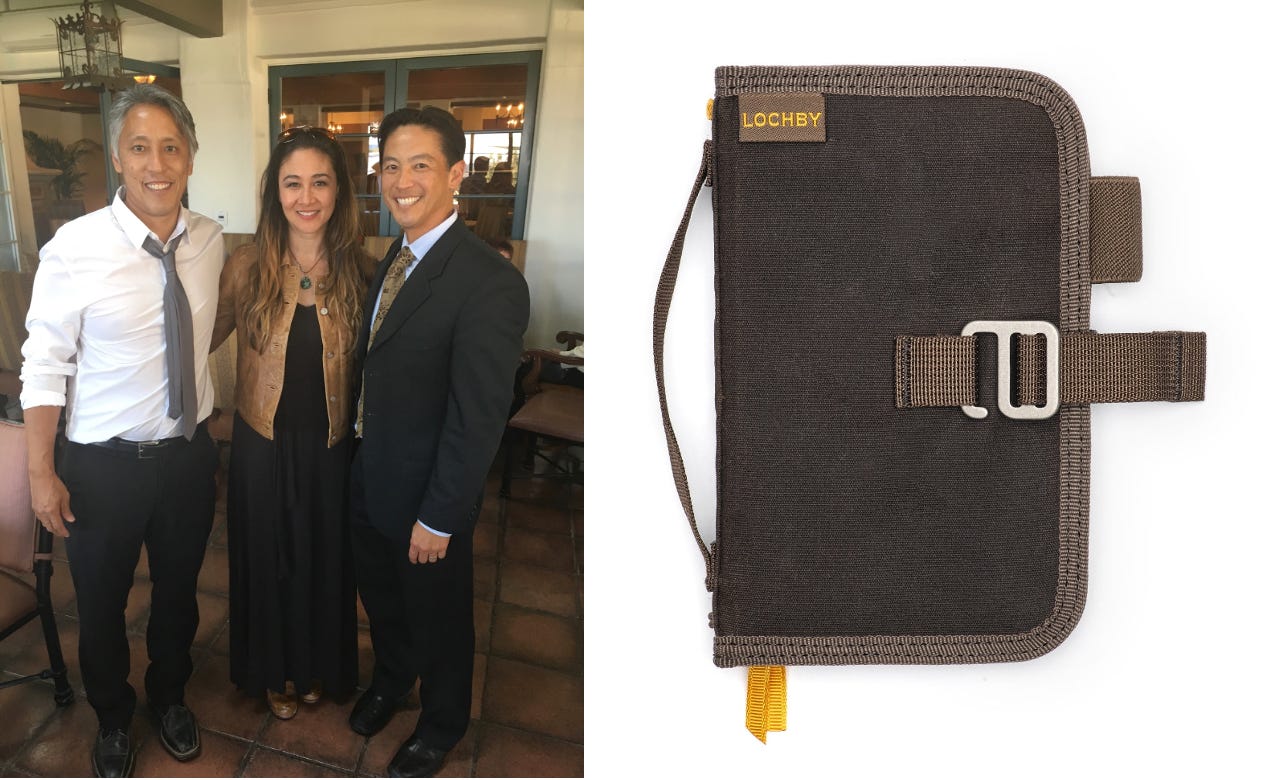
And the winner of the latest Waterproof Notebook giveaway is… Tad Suzuki! Tad wins a Lochby Mini Field Journal, which holds four Field Notes or Moleskine Cahiers pocket notebooks, plus a pen, business cards, index cards, and more.
(Black Friday alert: Lochby is having a buy one, get one 50% off sale.)
Tad and I go waaaayyyyy back to the time before memory. Our families, the Suzukis and the Tanakas, along with the Sumidas, were three of the first Japanese-American families in Santa Barbara, California. His father, Tad Suzuki Sr., and Hilton Sumida went to Alaska with my dad on his last big fishing trip, when Dad caught the king salmon we failed to catch in The King of Tides.
I last saw Tad and his brother, Lloyd, at the funeral of Hilton Sumida in 2018. I think the last time we’d seen each other before that was as little kids learning to walk on stilts in their back yard. If I had brothers, I imagine they’d look like them.
A note on Waterproof Notebook giveaways: Some companies may donate products for me to give away, but I don’t accept money or kickbacks. I only feature products I personally test and recommend. This notebook is something I purchased myself.
How giveaways work: I ask Claude to randomly draw a name from a spreadsheet of subscribers. Free subscribers get one entry. Paid subscribers get five entries. And top Substack recommenders get 10. Tad is a free subscriber.
Two Writers Talking: How do write about yourself without feeling like a narcissist?
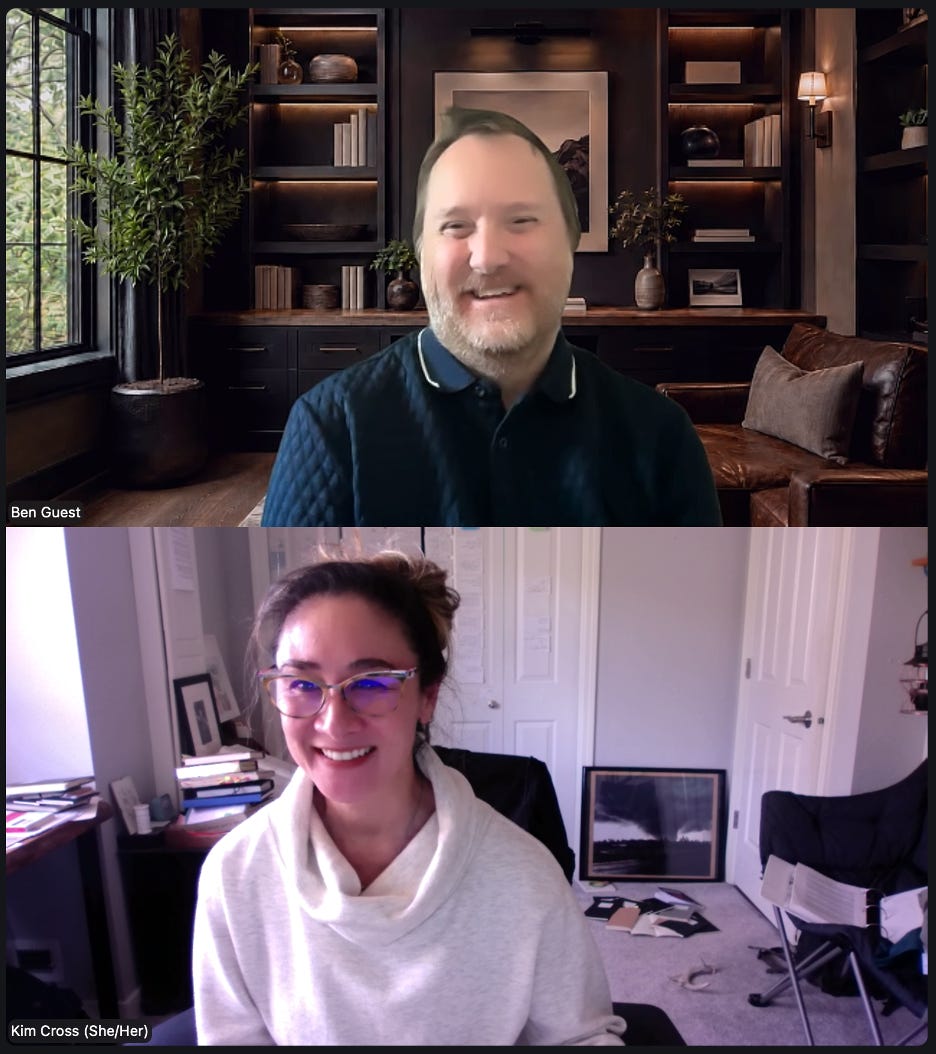
NOTE: This is a new series I’m calling Two Writers Talking, in which I’ll share insights from conversations with fellow writers. This transcript has been edited for length and clarity. Full version available for paid subscribers.
Ben: Besides checking your phone, what is the most common way you procrastinate while writing?
Kim: Oh gosh, there are so many ways. I’ll pet the dog. Make coffee. Or I’ll go open the fridge or the pantry and just stare. Sometimes I will toggle over to another project and work on something less urgent. Or start writing things on my to-do list.
Ben: This is aspiration goals for me. The way you procrastinate on a writing project is to work on another writing project. That’s so productive!
Kim: Sort of. Sometimes I just go shop online sales. I buy most of my clothes on consignment or deep discount. So I’m always looking at Poshmark. When I meet a big deadline or goal, I’ll reward myself.
Ben: Love it.
Kim: So, Ben, I reached out because I need help wrapping my head around memoir. I’m eight years into the research for a book and I haven’t even finished the book proposal.
It’s not exactly a memoir. Instead of a third-person reconstructed narrative like my other books, this one is a first-person quest that unfolds through eight years of reporting. There will be many observed scenes (written with notes and recorded dialogue) but also some memoir-ish flashbacks.
I’m a necessary central character in this book, a sort of guide through a bigger issue. But I’m struggling with writing about myself without feeling like a narcissist. I need help finding my voice and my confidence as a first-person narrator.
“The three things every memoir needs: Vulnerability. Authenticity. Honesty.”
—Ben Guest
