

In January, I took a long-planned reporting trip to Hawaii. I was still reeling from December. My mother was cremated the day after Christmas, the day before my son turned 18. Two days later, on Mom’s 85th birthday, the void in our house, where she lived with us, echoed with her absence.
Her memorial service will come later this year, in Alabama or Florida, where most of her family and friends are. But I filled an aspirin bottle with her ashes and tucked it in my pack. I wanted to bring her with me—again.
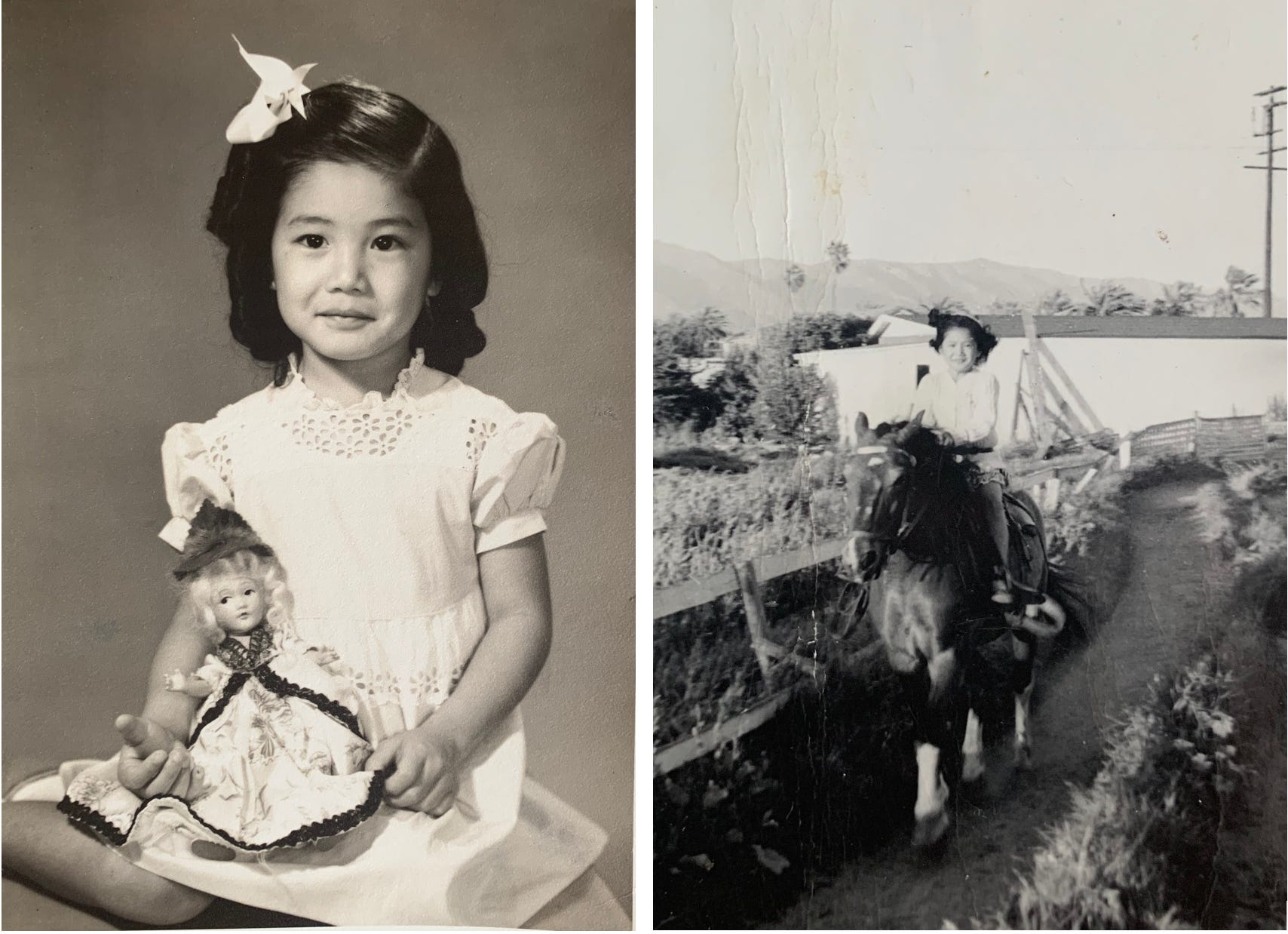
Born in 1941 to Japanese-American parents, Mom was a girl who wished to climb trees, but had to play the violin. In one black-and-white studio portrait, she is holding a doll and smiling unconvincingly. In other photos, on horseback, she is beaming.
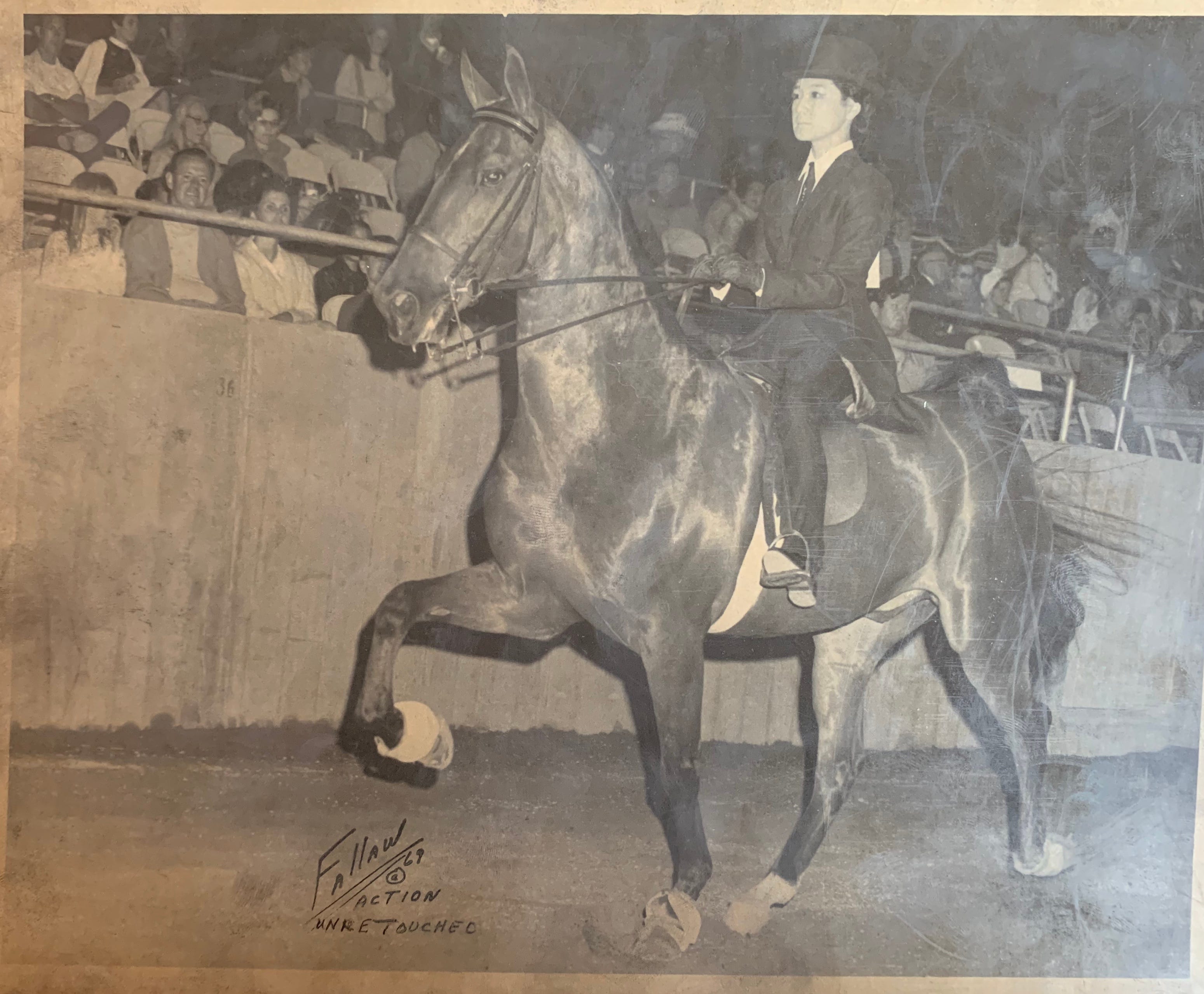
In her twenties, Mom bought a horse, rode English, and competed in dressage. Her first love (besides horses) may have been her horse trainer.
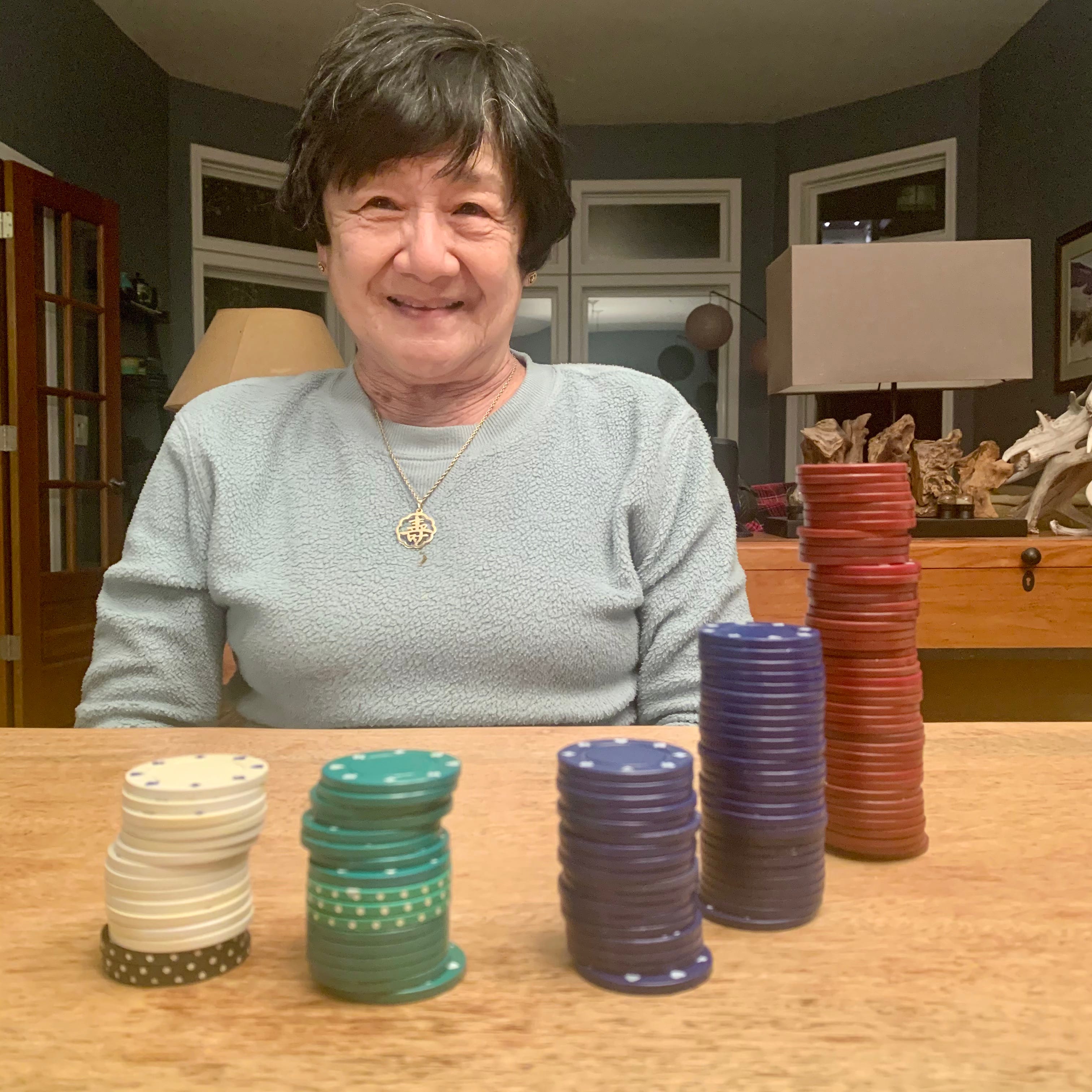
Her other passion? Cards. On special occasions, she performed two of the most spectacular card tricks I have ever seen. One involved lighting a piece of paper on fire and rubbing the ashes on her arm for the big reveal.
In the 1970s, she was the only female member of a Japanese poker group. Once, when a guest was invited to poker night, she bluffed him so successfully that he threw his cards in her face. Her poker buddies escorted this man to the door. He was never invited back.
When she met my dad, she had no interest in marriage. “I loved walking down the street by myself,” she once told me. “I felt so free.” But the scientist convinced her to go out on a date. While he was filling the tank at a gas station, she locked the doors of the car. As he tapped on the window—Joyce! Unlock the door!—she pretended not hear him and kept looking straight ahead. Poker-faced.
When she was pregnant, the only friends who threw her a baby shower were the men from her poker group. They gave her a Pack ‘N Play and a year’s worth of diapers so she wouldn’t stop coming to poker night. She gave birth at 35, a woman of “advanced maternal age.” The epidural she ordered never arrived. My father, seeing her face contorted by pain, immediately tied his tubes. He couldn’t go through that again.
She spoiled her daughter, her only child, with opportunities she didn’t have. Swimming lessons before two. Gymnastics at three. Summer camp in kindergarten—with archery and riflery. Ballet, tap, and jazz in elementary school. Track and soccer in high school. Thirteen years of competitive water-skiing. She drove me to tournaments long after my dad stopped going. When I won Nationals, she ran to the edge of the lake and I skied right into her arms.
During my college study-abroad, she visited me in the Netherlands and slept in my dorm room, which was so ascetic she joked that it would make a monk feel deprived. In the dormitory kitchen, she helped me prepare a sushi dinner for 35 friends. She was acrophobic, but agreed to try rock-climbing at an indoor gym. When she reached a tricky overhang, she asked to be let down. I shook my head. I knew she could do it. Reaching the top of that 65-foot wall (rated 5.9) became a point of pride.
Her visit coincided with a class trip to a Dutch island called Schiermonnikoog (a name so impossible to pronounce it was a WWII password). I tried to opt out. How weird is it to bring your mom on college trip? My peers disagreed. (She’d won their hearts with sushi.) When we all went out to the discotheek, she decided to stay at the hostel. On the dance floor, I turned around, and there she was. My friends had dragged her along.
On the island, we booked a horseback riding excursion on a mile-wide beach. “Who has riding experience?” the guides asked the group. Mom and I shyly raised our hands, so we got the most spirited horses. “Keep them nose-to-tail,” the guide told us. “If they jump out of line, they’ll see the open beach and want to race.”
Before that day, I had never experienced a canter. Nothing faster than a trot. I had always dreamed of learning to gallop. So when I found myself on a runaway horse, racing its sister down a mile-wide beach, I leaned into the wind, wild-eyed and hooting maniacally, punch-drunk on epinephrine.
Then I looked over at mom and saw that her girth—the strap that holds the saddle onto the horse—was loose. With each four-beat stride, the saddle slipped, and rotated another degree. Soon she’d be underneath the horse and its fiercely beating hooves.
To save herself, she did a move she had taught me as a child: an emergency dismount. Out of the corner of my bleary eye, I saw the blur of her body spinning in the sand. When she came to a stop, thoroughly breaded with sand, her sunglasses were broken. She got back on the horse, but her spine, twisted into an S by childhood scoliosis, would never be quite the same.
Age didn’t slow her. At 65, she could still do three one-armed push-ups. She learned to mountain-bike at 69, riding logs and features that intimidated me when I learned the sport in my twenties. In her 70s, she was mountain-biking with a 30-year-old friend when she crashed. It wasn’t lack of skill; she was looking back at a male rider trying to pass. (It turned out to be her pain doctor; he didn’t even stop to help.)
Her arm hurt, but she took two Tylenol and cooked her friend dinner. The next morning, two more Tylenol didn’t kill the pain, so she drover herself to the ER. The X-ray showed two broken bones in her arm. Surgeons fixed her arm with metal plates and screws. She kept riding.
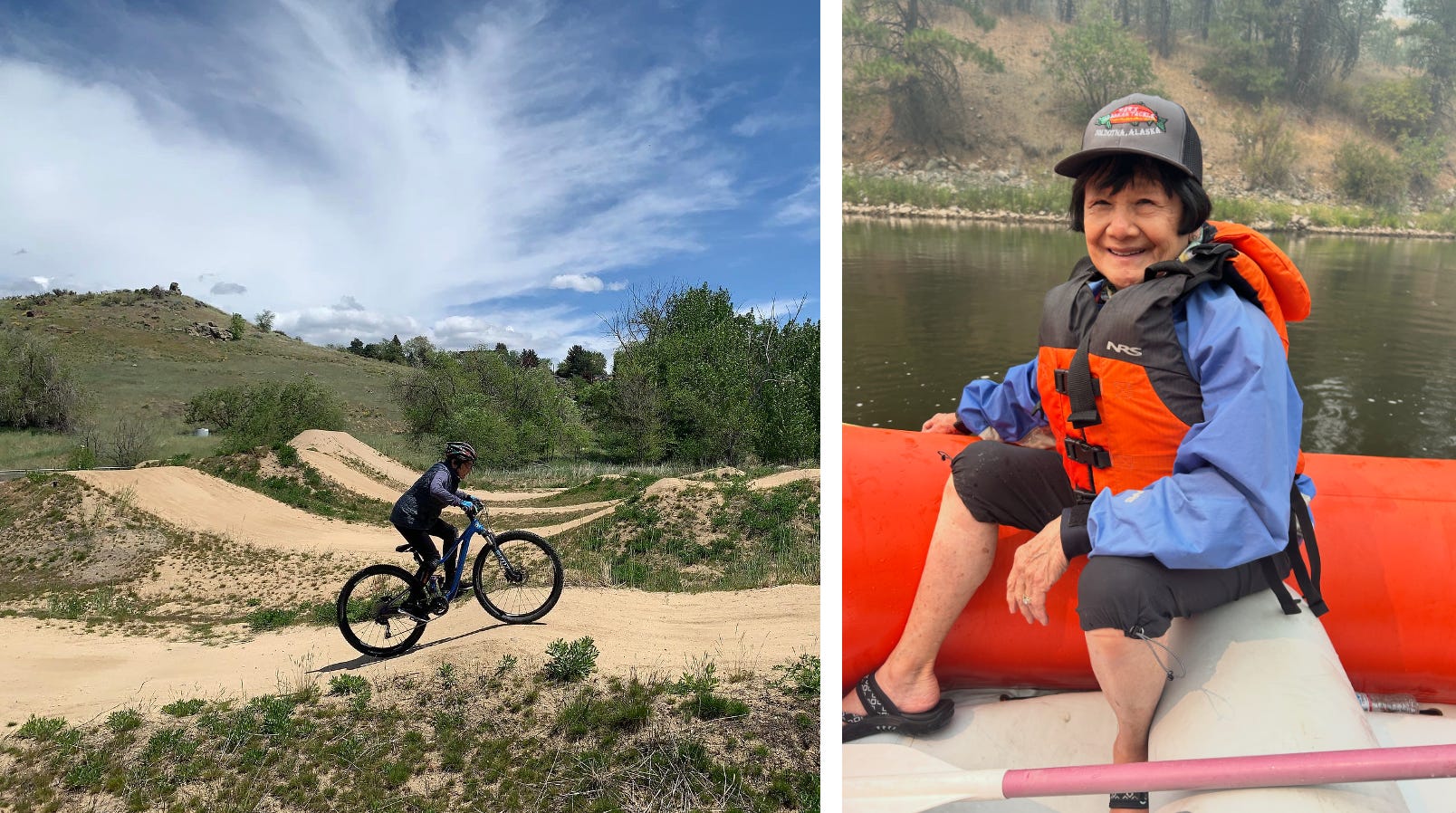
At 80, she rode the beginner dirt-jump line at the bike park. (She didn’t catch air, but she pumped the rollers with textbook form.) At 83, she went on her first whitewater rafting trip and “rode the bull.” (Usually reserved for kids, that means sitting on the nose of the raft in a wave train.)
Seven days before she died, just shy of 85, she left notes, written on paper towels and placed in every doorway, and under the Christmas tree, begging to go on a bike ride. How could I say no? Not knowing it would be her very last ride, I filmed it and made an Instagram reel. It got 14,000 views, which I thought was a hit, until this slide show of her life went viral and got 50,000 views.
How did my mother become a badass?
Her mother, a second-generation Japanese-American woman, was a Sakura-parade princess, a doctor’s wife, and nothing like her at all. My mother modeled unspoken values for me: It’s okay to be unapologetically strong, to not act your age, to play with the boys and beat them as often as you can. But who modeled this for her?
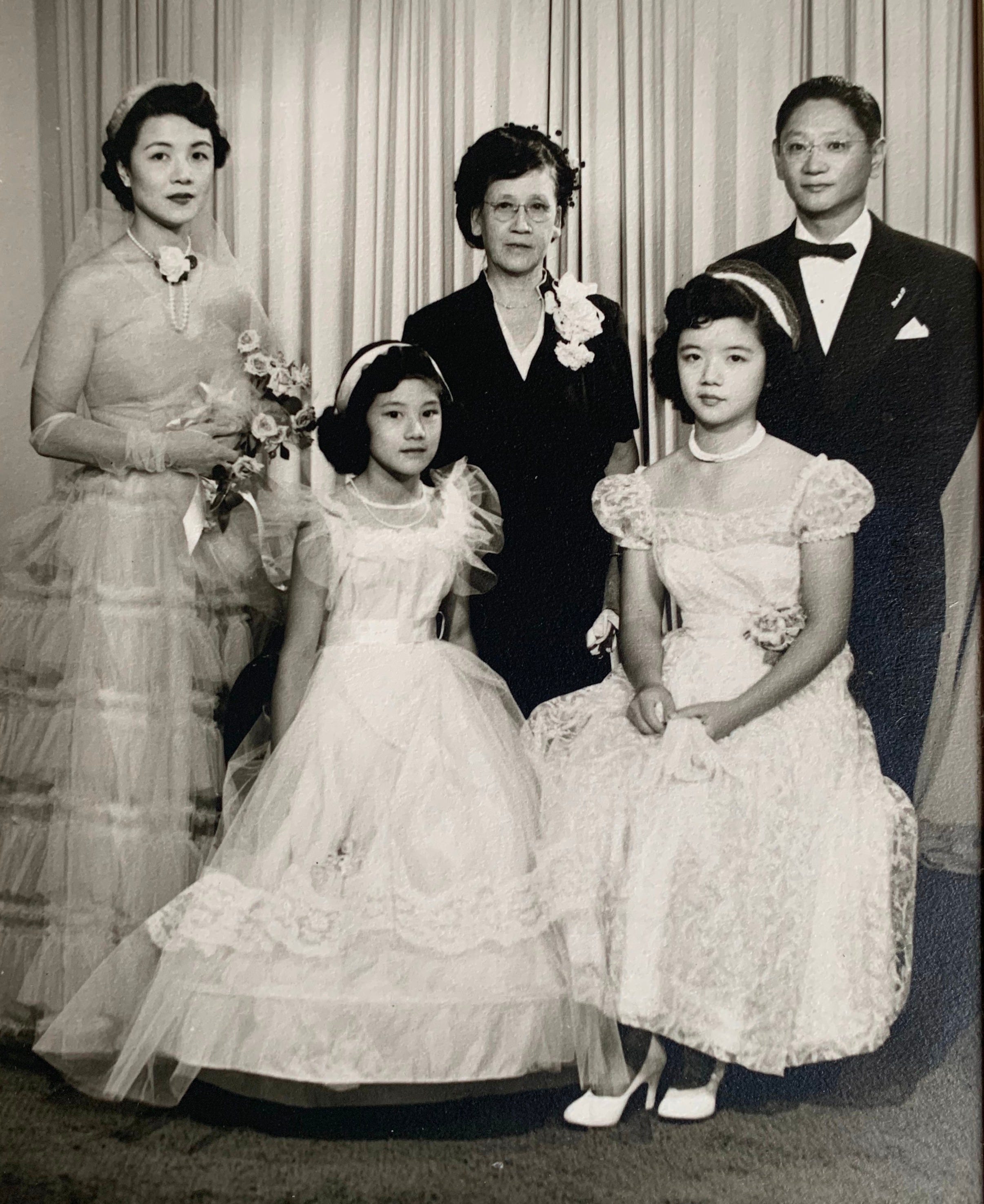
It must have been my mother’s mother’s mother. My great-grandmother, a “picture bride,” came from Japan on a ship in 1912 to marry a man she had never met. They settled in El Paso and ran a farm. One of our nation’s first registered midwives, she delivered babies, mostly to poor families who paid for her services with chicken and produce. She delivered so many babies that two historians have referred to her as “The mother of El Paso.”
When I was born in Santa Barbara, my great-grandmother lived next door, in my grandparents’ house. I called them “Little Grandma” and “Big Grandma.” By then, Big Grandma was bedridden, and Little Grandma was her caregiver. When I was three or four, I would sit by Big-Grandma’s pillow and brush her long silver hair.
In my thirties, before I became a mother, I made my first trip to Japan. I visited my Big Grandma’s grave in the tiny fishing village where she was born. A distant cousin—the great-granddaughter of her sister—showed me how to honor her by pouring water on her gravestone. Family lore (which I’m trying to fact-check) holds that Big Grandma was the illegitimate daughter of the emperor.
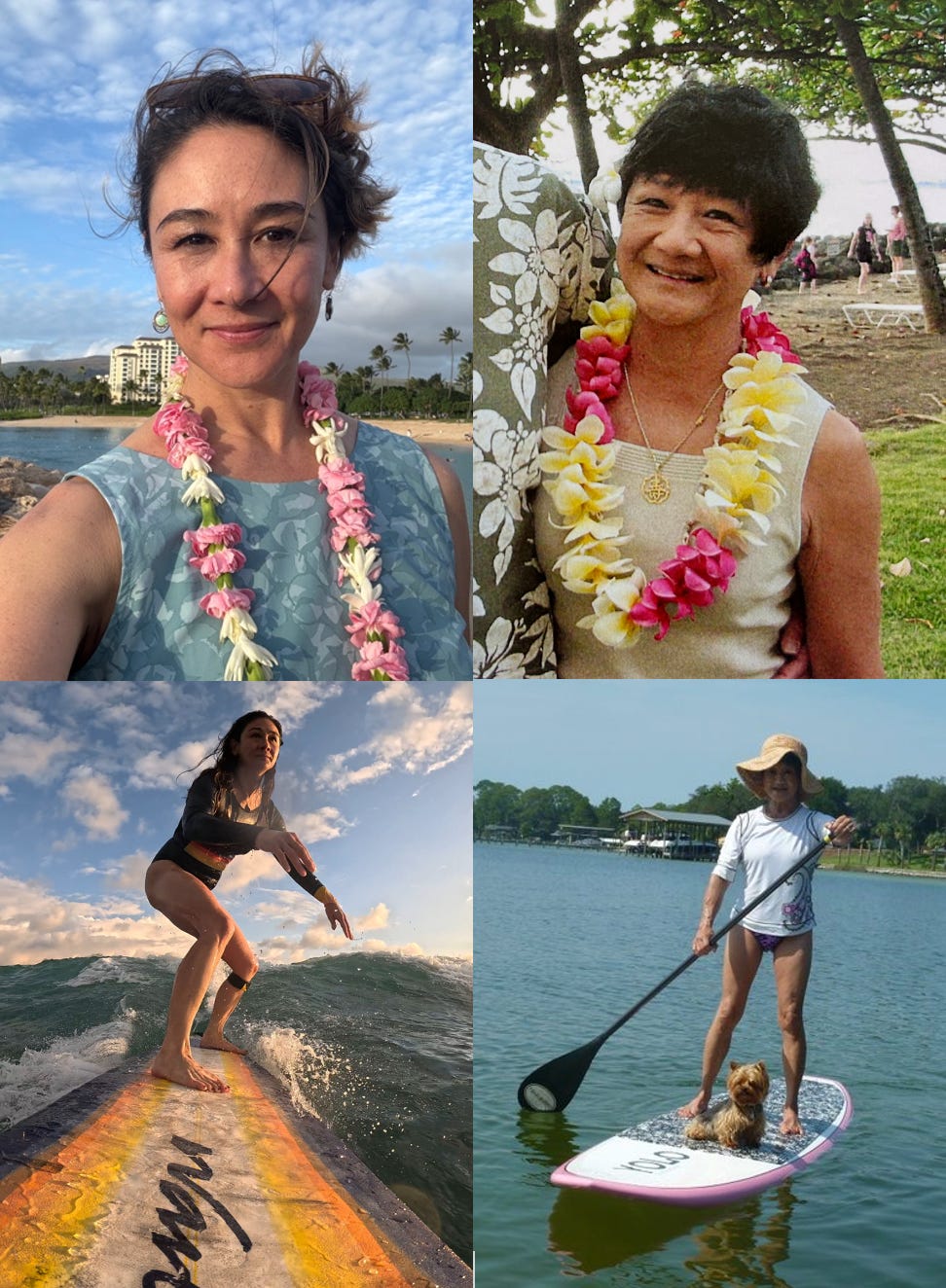
On my trip to Oahu in January, I decided to scatter Mom’s ashes in the sea. Like me, she loved the water. In her twenties, she water-skied with her brothers on the Colorado River. In her late sixties, on the day we scattered my father’s ashes in the Gulf of Mexico, she learned to stand-up paddleboard. She bought two YOLO SUPs and paddled the still waters of the bay behind her Florida home, accompanied by her first mate: a miniature Yorkie named Tchotchke.
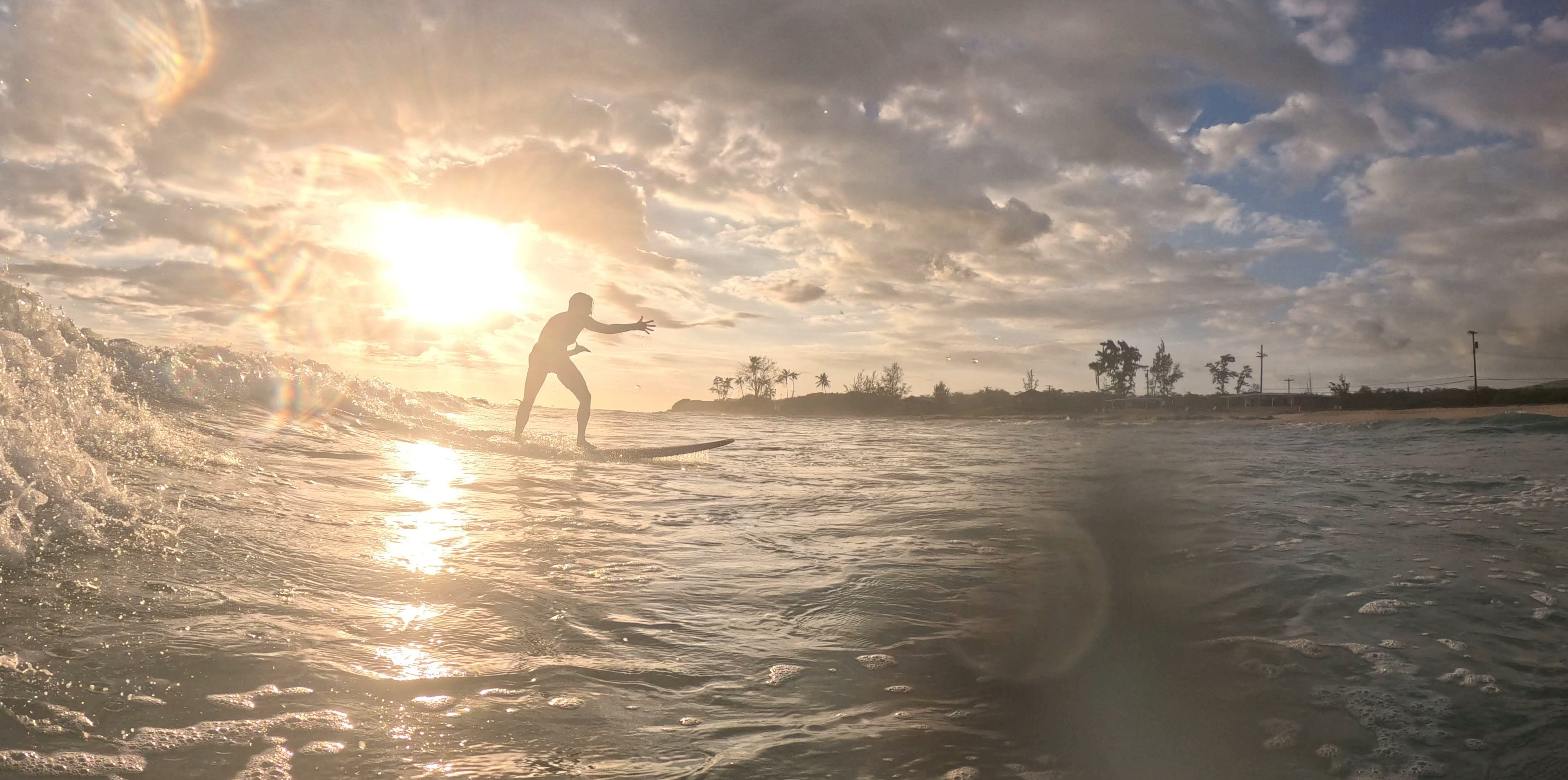
In Hawaii, between interviews, I got to surf a few gentle breaks. I was curious, after two years of learning to river-surf in Idaho, whether the skills would translate to ocean surfing. The two are very different. In river surfing, the energy is coming straight at you. In ocean surfing, it’s coming from behind.
On my last surf session in Hawaii, I asked my Hawaiian friends if it was all right if I scattered some of my mother’s ashes. “Of course! It’s called a paddle out,” they said. “We do this all the time.”
As we suited up on the beach, a memory resurfaced. After my mother lost her mother, she used her small inheritance to plan a family trip to Hawaii. My father, mother, husband and I spent a week on the Big Island.
I thought about that as I paddled out. As the sun sank over the Pacific, I straddled the board and pulled out the tube of my mother’s ashes. I unscrewed the cap, and sprinkled her into the waves. “Mom, I miss you,” I said. “But you’re always with me.”
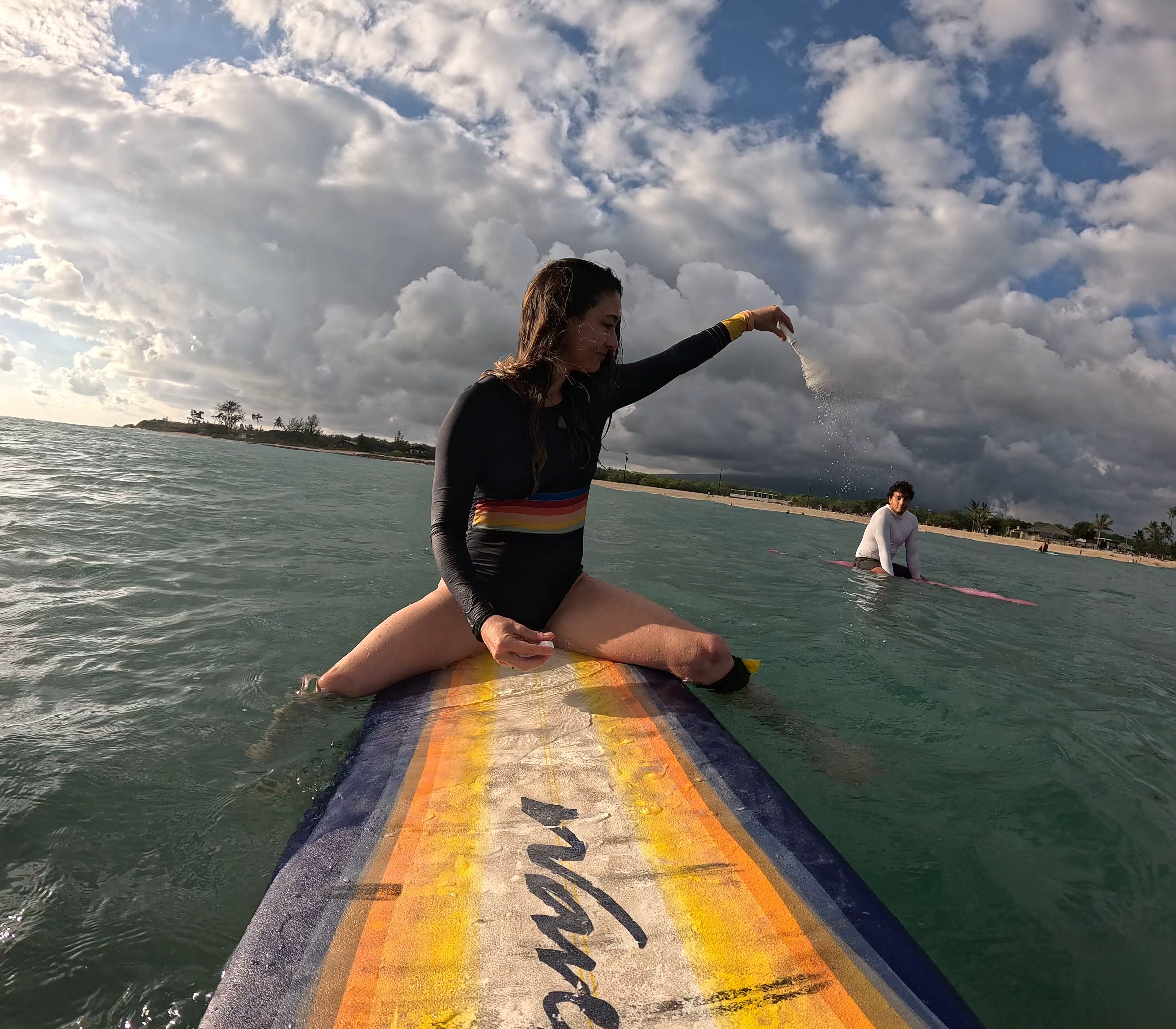
I had time to shed exactly one tear before a rogue wave bucked me and made me laugh. It felt like an elbow in the ribs from my mother, ever the practical joker.
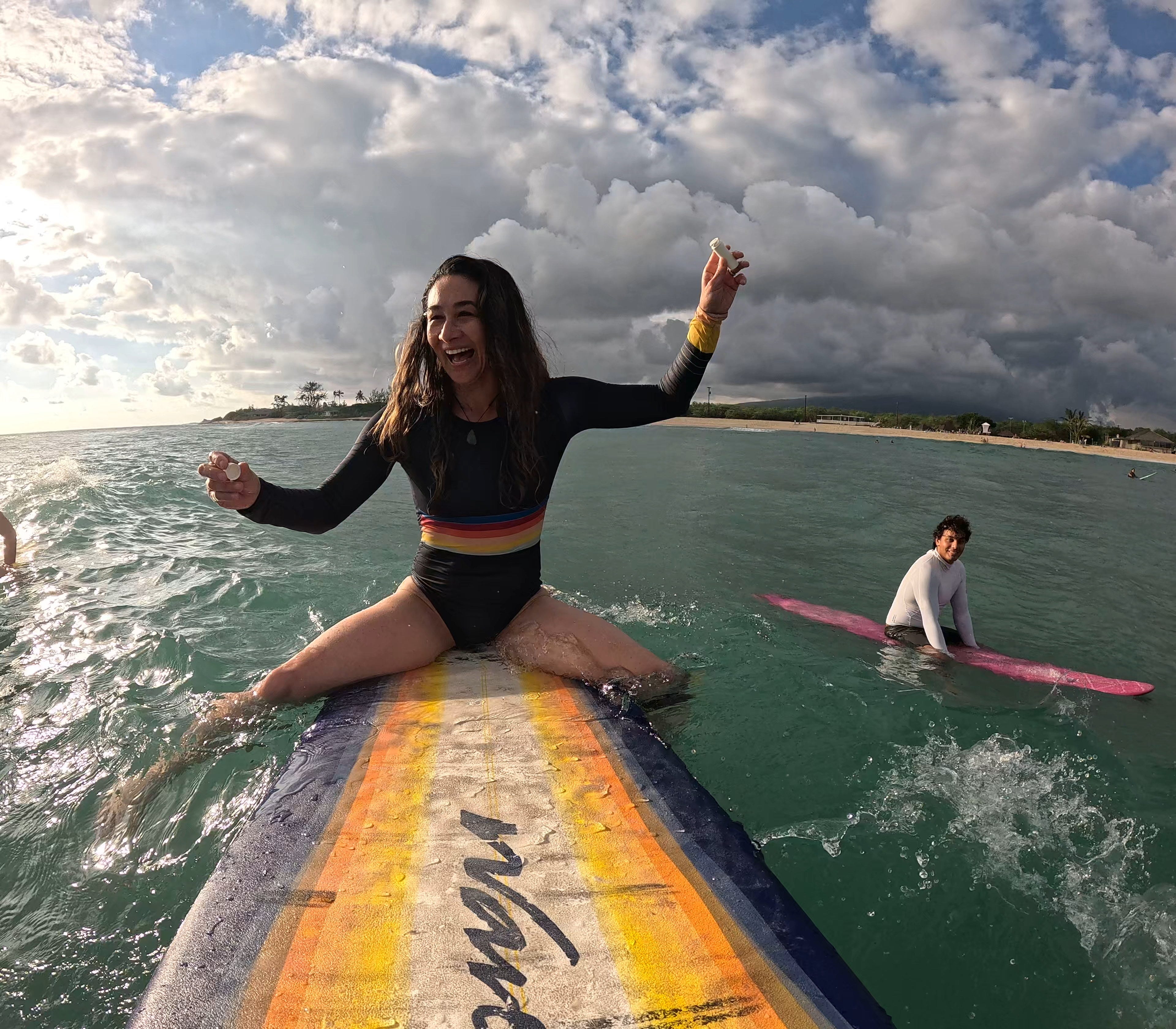
“Her spirit—we call it mana here—it’s like power,” my Hawaiian friend said. “So now she’s with you on this surf. And she’ll be with you wherever you go.”
The waves came, small and clean, in perfectly timed sets. I felt my mother with me. And we surfed better than ever before.
Grandma’s Funeral at Stand Five
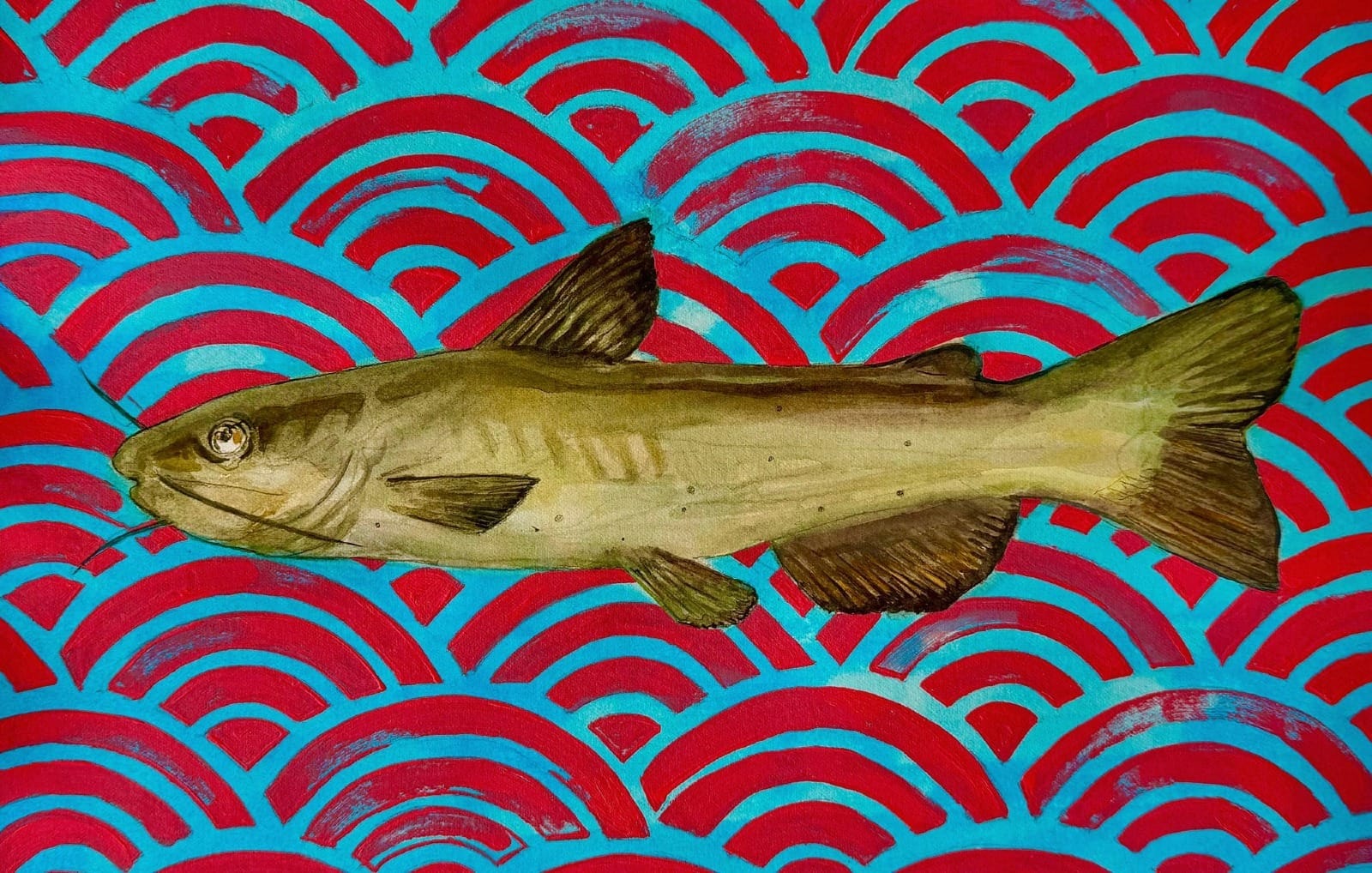
Shortly before my mother died, I published “The Persimmon Tree at Stand Five,” a story about her mother’s funeral at a deer stand on land owned by uncle and cousins in Montgomery, Alabama. It ran in Southlands, a new print magazine dedicated to Southerners’ unique relationship with the outdoors.
Before this, I haven’t written much about my Asian-redneck childhood. The assignment caused me to question: How did my Japanese-American family come to be Southerners. Are we? Am I?
In December, mom awoke one morning raging around in what I came to call a “dementia fugue.” Alzheimer’s is a cruel disease that hijacks the minds of its victims. Seeing Mom in a fugue was like watching my loving mother possessed by some malevolent intruder.
“Hey, mom!” I said, looking for a way to distract her. “Want to see the story I wrote about grandma’s funeral?” That tripped the dementia circuit, and she slowly wound down. We sat hip-to-hip on a beanbag chair and I read her the longform story. She nodded, and the memories seemed to resurface. I blew a deadline, but I didn’t care. We needed this beautiful moment.
In memory of my my mom, Southlands is offering a gift to my readers. Later this month, when I do the drawing for my Waterproof Notebook giveaway (a perk for paying subscribers), I’ll also give out a free subscription to Southlands (they’re even throwing in a hat). If you knew my mom, and want to honor her, skip flowers and subscribe to Southlands or Geezer. Mom subscribed to every magazine that published my work, and she loved the family stories that ran in these two new magazines just before she died.
Island of Souls
I’ll leave you now with one of the saddest songs I know. “Island of Souls” is the first track on The Soul Cages, a meditative, melancholy album Sting wrote in the wake of his father’s death.
“I felt emotionally and creatively paralysed, isolated, and unable to mourn,” Sting told one interviewer. “I just felt numb and empty, as if the joy had been leached out of my life. Eventually I talked myself into going back to work, and this sombre collection of songs was the result...”
Some mornings I wake up feeling paralyzed. Others, numb. Every once in a while I feel so lonely and raw I hide, because I can’t bear to drag others down, but I also don’t know how to lie or pretend that everything is fine.
On the day of Mom’s cremation, I didn’t want to be comforted or pitied. I just wanted to be alone and process emotions in my own way. I did the two things I do to survive. I wrote in my notebook. Then I went to the river to surf. As her body rolled into the flames, I threw myself into a frigid rapid, surrendering to liquid chaos and the non-linear nature of grief.
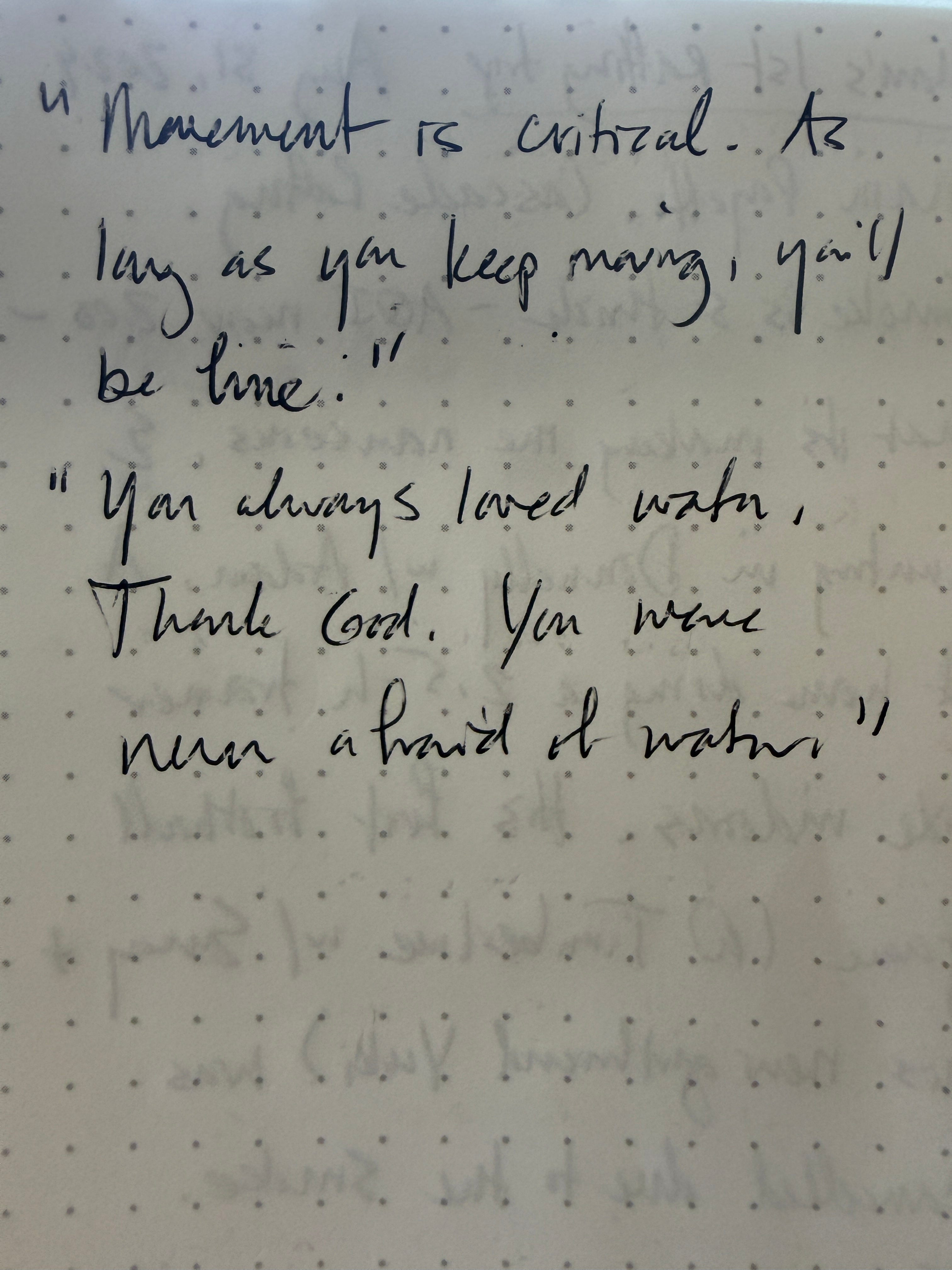
A few days ago, I found the waterproof notebook I’d tucked in my vest on Mom’s first (and last) whitewater rafting trip, two summers ago. I’d written down something she said day. Today I hear her voice telling me exactly what I need to hear: Advice for how to face the lonely world without her:
“I felt my mother with me. And we surfed better than ever before.”
So beautiful Kim, thank this lovely post.
Kudos to you and your amazing Mom
Thanks for sharing these incredible stories and memories of your mother, Kim. What a remarkable, inspiring woman. And she raised one as well.