

The Catch
I first learned about Virginia Kraft—one of the most important outdoor sports journalists of her time—when a journalist named Emily Sohn asked to interview me for a story about Kraft.
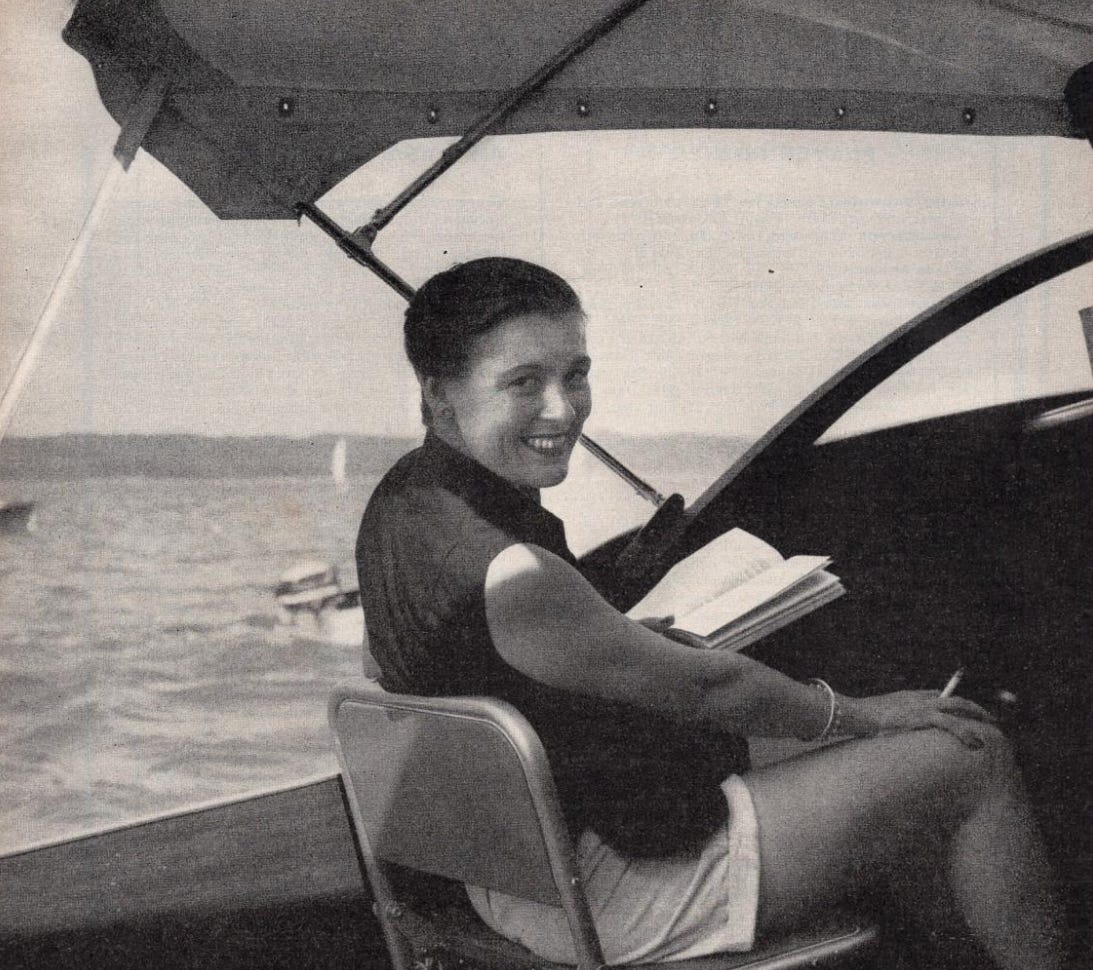
Virginia who? I confessed I’d never heard of her. When Emily told me more, I realized I wasn’t alone—in not knowing, and wondering why. One of the first female staff writers for Sports Illustrated (SI) Kraft wrote about (and was skilled in) big-game hunting, tournament fishing, and other male-dominated pursuits in the 1950s. As Emily wrote in her award-winning Long Lead story, The Catch:
Over a 26-year career at SI, Kraft wrote deeply reported and immersive features, just like her male colleagues. All the while, she quietly racked up an unrivaled collection of firsts. She was the first woman to race in a major dogsled event in Alaska, the first woman and first foreign journalist to hunt with General Francisco Franco of Spain, and likely the only mother of four to traverse six continents to take down all of the Big Five trophy animals. Yet despite the enduring reputation enjoyed by her male contemporaries at SI — including George Plimpton, Frank Deford, and Roy Blount Jr. — her work has since faded into obscurity.
Despite more than 100 SI bylines and significant accolades and attention in her time, Kraft is absent from lists of pioneering women in journalism, and her articles are excluded from discussions of notable SI stories. Her work isn’t covered in journalism schools, and when asked, none of my peers was even familiar with her name. Virginia Kraft might be the most influential sports journalist nobody has ever heard of. Why?
Emily wanted to interview me about what it’s like to be a minority in a minority: an Asian-American female outdoor sports writer covering largely white male-dominated sports—mountain biking, road cycling, and fishing. She’d read my stories in Outside about equity in sports and was curious about my personal experience.
“I honestly didn’t feel like being a woman was a disadvantage until the last few years, when I started thinking, ‘Oh, yeah, sometimes women are kind of treated like Junior Varsity in the sports writing world,” I told her. “Maybe I was just really naive.”
Once I started looking, I noticed an interesting pattern: More women were making a name in “the boy’s club” of long-form narrative journalism and the sub-niche of long-form narrative sports writing. Which rocks! But online, at conferences, and in collegial groups, the men tended to celebrate work by other men more loudly and frequently than they celebrated similar work by women. (With some notable exceptions. More on that in a minute.)
This pattern incurred furtive conversations among the women: Should we say something? We didn’t want to alienate the men, be seen as complainers, or risk our seat at the table. I bit my tongue for years. Then, in a moment of excruciating vulnerability, I gently shared my observations with a few male colleagues I trust and respect. Their response led me to believe the cause is a genuine lack of awareness.
So how do you raise awareness without assuming the role of an activist? Virginia Kraft didn’t see herself as an activist. As Emily wrote, Kraft “may have already realized that she was going to advance in the very male world surrounding her only if she beat the men at their own game and became one of the best shots who ever lived.”
Did Kraft encounter the pushback that activists often face? My friends Kathryn Bertine, who advocated for a women’s Tour de France race, and Shannon Galpin, who supported women cyclists in Afghanistan (and later helped them escape the Taliban and evacuate to safety) have been vilified, gaslit, and terrorized by trolls. I wish I had their courage. Compared to them, I feel cowardly.
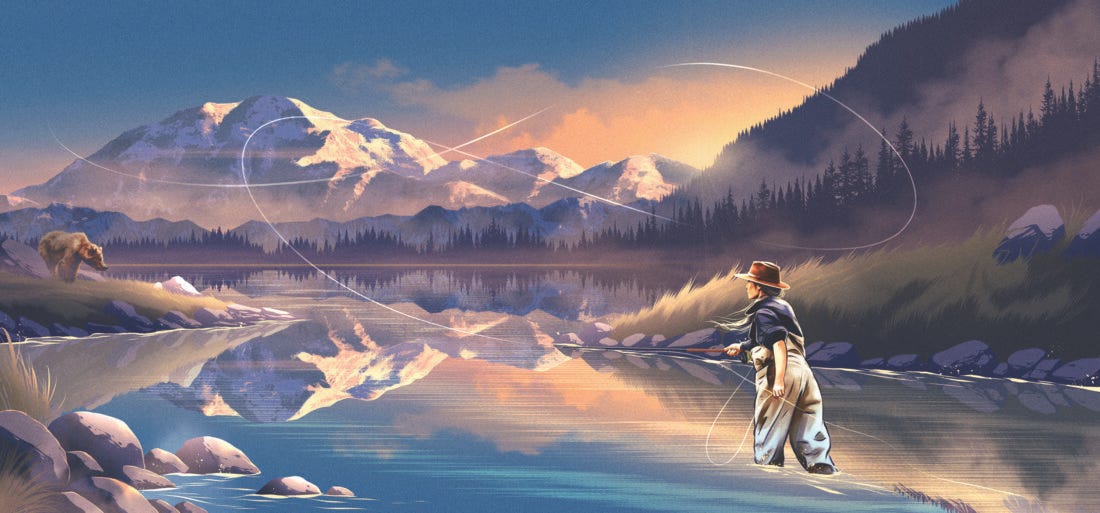
In my quest to write more about fishing, I’ve encountered some sexism, mostly in the form of patronizing comments, man-splaining, being ignored in busy fly shops, and the occasional dude who assumes that by fishing I’m really trolling for a hook-up. I try to let it roll off my back like water off a duck. Fishing is too joyful to let some knucklehead ruin it.
Often, though, I’m pleasantly surprised. When a male editor at Garden & Gun asked me to contribute to their annual sporting issue, I was thrilled to write about chasing chinook. When the issue hit newsstands, I got an email from one of the other writers—all men—whose bylines appeared in “For the Love of the Game.” I was the only writer in the bunch that he didn’t know, and he wanted to make it a clean sweep.
On the phone, Worth Parker and I connected across 2,000 miles, commiserating about raising kids, getting skunked, and splitting wood. He edits the Tom Beckbe Field Journal, a small online journal of storytelling about upland hunting and fly fishing. Would I like to write for them? Of course I would! I also felt I’d made a friend I could call and say, “Hey, man. I’m in Wilmington. Wanna go fishing?”
Moments like this are worth pausing to appreciate at a time when women’s rights are being eroded. I want to acknowledge the good dudes, some of whom are even more aware than I am. The ones who notice when my class reading list needs more female authors, do gender-audits of popular podcasts, and go out of their way to mentor women and women of color. All of the guys I’m nodding to here (y’all know who you are) are white men.
I’m equally grateful for the many women who go out of their way to help other women (so many that I’m nervous to name them here, for fear of leaving someone out). As Emily mentions below, it’s been encouraging to feel part of a community that believes we’re all in this together.
The Perfect (Waterproof-ish) Warm Layer
If you’ve never owned a garment made of merino wool, the benefits of this natural fiber sound almost too good to be true. It wicks moisture and dries quickly, keeping you cool in hot weather. Unlike cotton, it retains heat when wet, so it can keep you warm(ish) if you fall out of a boat or get caught in a downpour. The fiber has anti-microbial properties, so it won’t stink like a synthetic shirt.
The downside: Some wool can be itchy, and the more delicate natural fibers can be prone to abrasion and moth-holes. It can also be expensive. (Though the right pieces are a worthy investment—and on sale right now.)
Back in 2019, I gear-tested a range of merino wool base layers. Then the pandemic hit, the magazine went out of print, and the story never ran. But I continued wearing the garments, so I can give you a true testimonial about the pieces that withstood five years of street wear and outdoor abuse. (More on this in tomorrow’s post.)
Of the handful of products that stood out, the one I wear most is the Women’s Convict Canyon Hoodie by Ridge Merino. A half-zip hooded mid-layer, it has a grid-fleece merino interior that feels soft against bare skin and a merino-blend exterior that resists abrasion. It’s extremely lightweight, stretchy, breathable, and cozy. I wear it weekly—as a base-layer under overalls and waders, over a jersey on fall bike rides, with jeans on a plane—and I can attest that it never gets funky like a synthetic fleece.
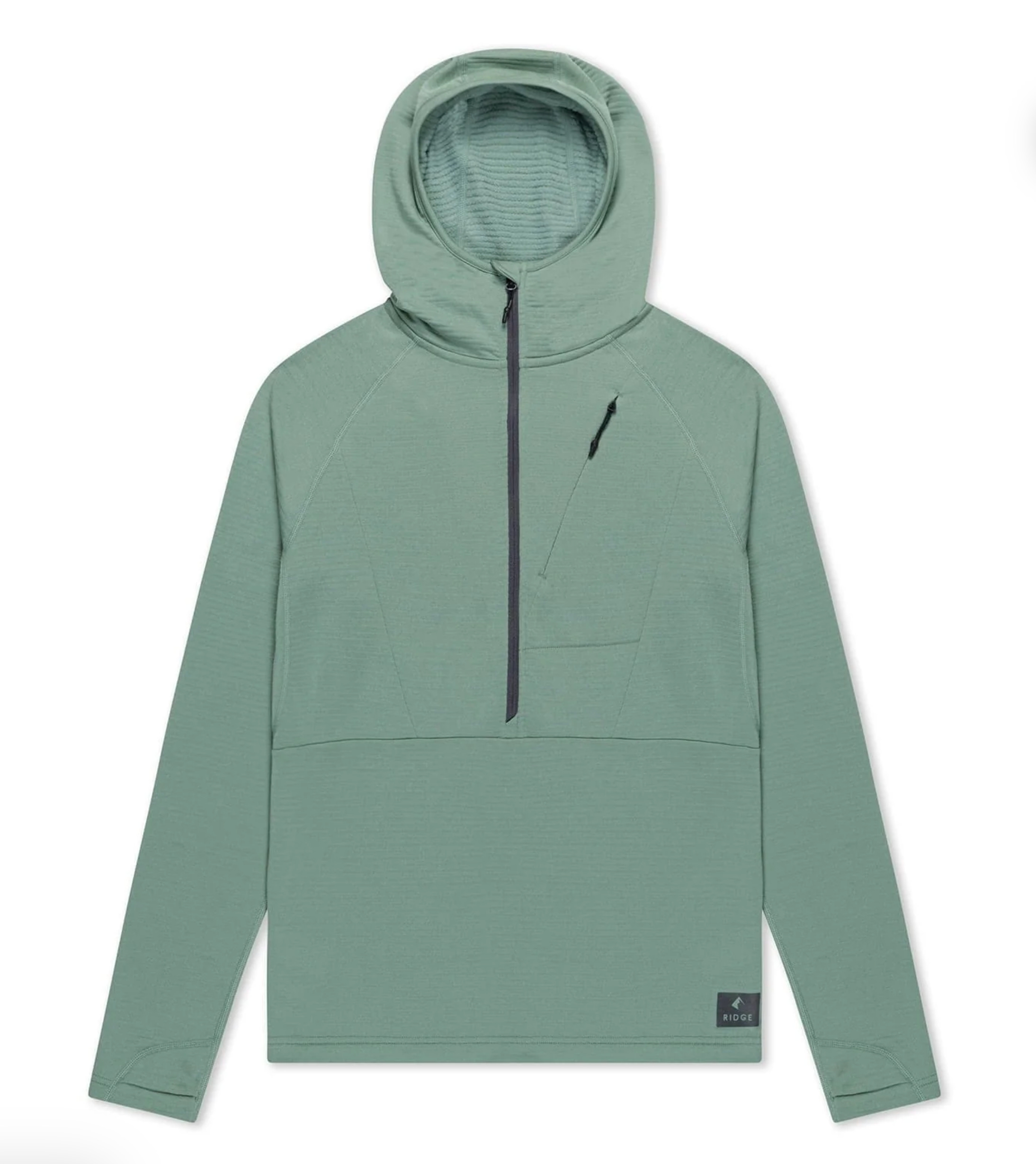
Ridge Merino, an American company based in Mammoth Lakes, California, has generally well-priced options (any quality long-sleeve merino shirt under $100 is reasonable). This mid-weight layer is $135, but with the 25% percent code CYBER2025 it comes down to $101.25.
In a Cyber Monday bonus post, all subscribers to The Waterproof Notebook will get the full list of merino wool garments that stood out in my 5-year test, including some by a lesser-known innovative company that engineers its textiles in-house with methods that blend the benefits of wool with the durability of synthetics. (For Black Friday and Cyber Monday, they’re all on sale!)
What’s On My Nightstand
As part of my reporting for an upcoming Title IX story, I’m doing a deep dive into the history of the fight for equity in women’s sports. (Any other recommendations? Reply to this email and let me know!)
Better Faster Farther: How Running Changed Everything We Know About Women, by Maggie Mertens
Locker Room Talk: A Woman’s Struggle to Get Inside, by Melissa Ludtke
Fierce and Fearless: Patsy Takemoto Mink, First Woman of Color in Congress, by Judy Tzu-Chun Wu and Gwendolyn Mink
What’s New
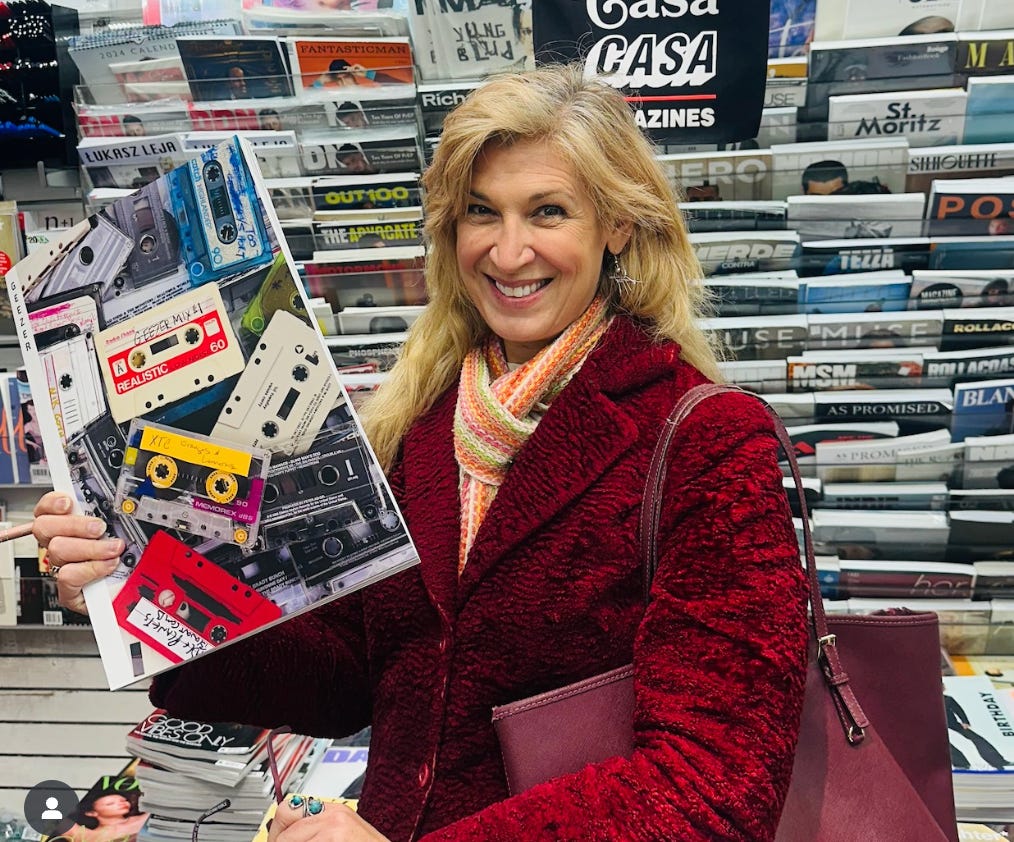
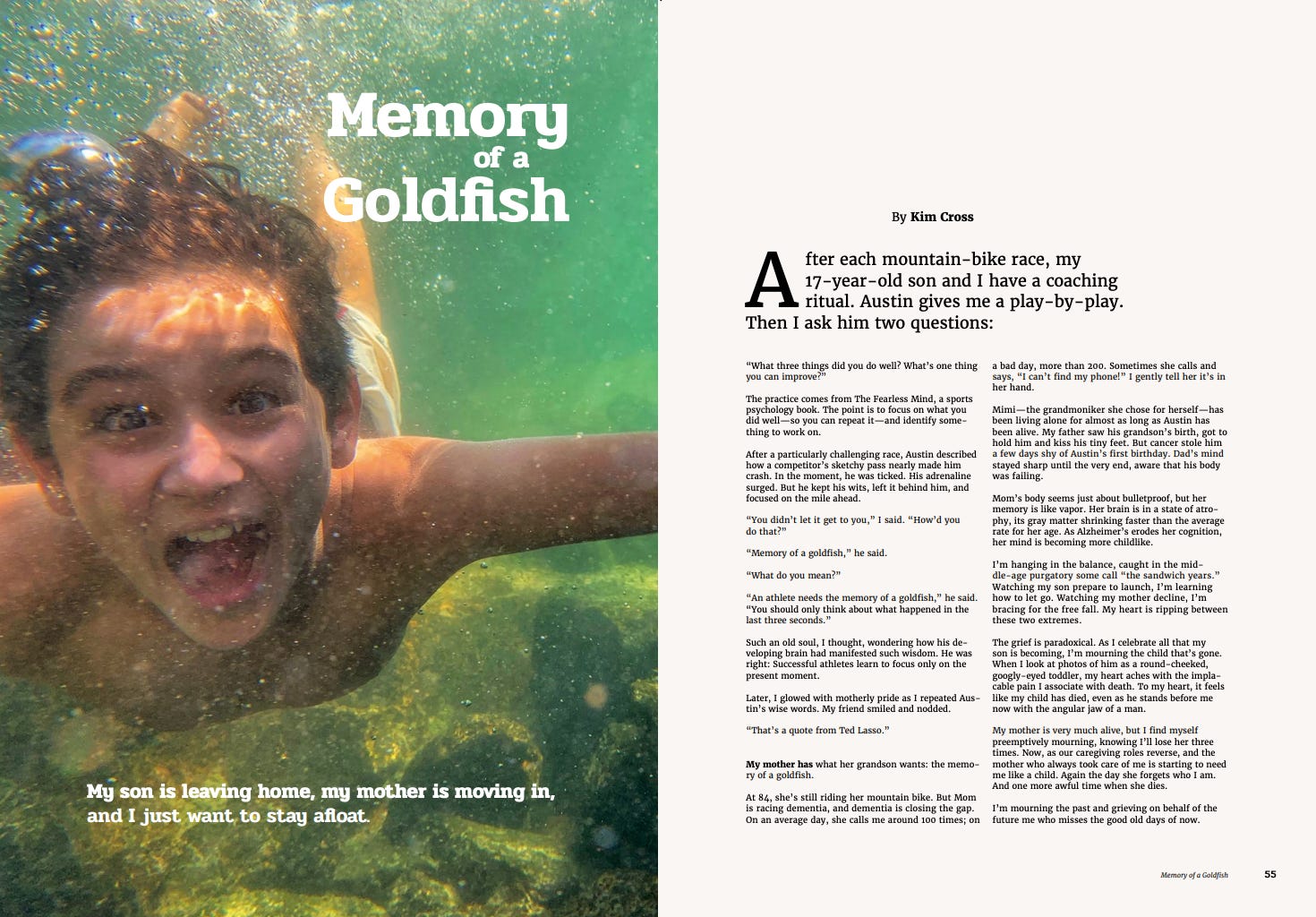
This month, Laura LeBleu, a brilliant writer/editor who dazzled me in my Harvard Extension School class, launched a gorgeous over-sized print magazine called Geezer. Target audience: Gen Xers committed to “kickin’ ass in our second half.” For Geezer vibes, watch a silly Instagram reel of me losing my mind over a hard copy and read my essay, “Memory of a Goldfish,” about the sandwich years of preparing kids to launch and caring for aging parents.
Last month I talked shop with Lee Gutkind, aka “the Godfather of Creative Nonfiction” about Dialogue: The Secret Sauce of Cinematic Scenes as part of Narratively Academy’s Open Book live video series. ($ubscription required)
The Alchemists, a story about Afghan teenage girls who convinced their culture that women and girls should be allowed to ride bikes, was anthologized in The Year’s Best Sports Writing 2025. (Subscribers to The Waterproof Notebook can buy a copy from any bookseller, and if you email me your address, I’ll mail you a signed bookplate with a personalized note. Same goes for any of my books!)
What’s Next
Spring 2026: One semester a year, I teach Feature Writing for Harvard Extension School. I adore my smart, non-traditional students, some of whom have gone on to launch magazines (See: Laura, above), publish their first feature in Esquire (looking at you, Jen Golbeck!) and get full-time reporting jobs (fist-bump to Ania Hull and Emily Piper-Valillo).
March 28-April 4: In my new role as Food & Wine contributing editor, I’ll be guest-lecturing about salmon aboard an 8-day Food & Wine / National Geographic cruise. Between off-ship adventures, guests will enjoy wines curated by Food & Wine executive wine editor Ray Isle and locally sourced, beautifully prepared cuisine. (Fingers crossed, I’m trying to get them to serve sockeye salmon caught by Reid Ten Kley, the fisherman in my F&W story, Out of the Wild.)
3 Questions With Emily Sohn

A freelance journalist based in Minneapolis, Emily Sohn writes about science and the environment for National Geographic, the New York Times, Outside, Nature, the Discovery Channel, and many other outlets. Her story about Virginia Kraft, The Catch, won a 2024 Webby Award, a Newhouse School Mirror Award for Best Profile, and was anthologized in The Year’s Best Sports Writing. She was selected as the winner of the 2025 Sharon Begley Award for Science Reporting and will use the $20,000 grant to work on a book, tentatively titled The New Wilderness, that “uncovers creatures thriving in human-altered enviroments.”
I asked Emily about her experience in outdoor writing and the challenges she encountered in reporting and writing The Catch. Paid subscribers will receive the full Q&A—with tips on reporting, writing craft, and process—in an exclusive issue of The Waterproof Notebook.
How did you break into the boy’s club of outdoor adventure longform journalism?
I have always been primarily a science and health journalist, but I love outdoor adventures and try to incorporate them into my reporting whenever possible. Unlike in sports journalism and adventure journalism, a large proportion of science journalists are women. I am lucky to have a strong support network of other writers, both female and male.
That said, it took me ages to break into Outside magazine, a longtime goal. In my early years of freelancing, I wrote a few short sciencey stories for Backpacker and one tiny blurb for a package in Outside. But I couldn’t figure out how to land larger feature stories in the outdoor adventure magazine world. In 2019 I finally got a long feature assignment for Outside, which included a reporting trip to Australia. I spent all day hiking 15 miles into a gorge with my source in July of 2019. I was living the dream!
For years, I blamed myself for my unsuccessful attempts to sell adventure-based longform. Maybe I only knew how to do science stories? I assumed my pitches weren’t good enough. It wasn’t until I was reporting The Catch that I started to wonder if there were other barriers I had been up against. It turned out that Outside had commissioned stories mostly to men until about 2017 or 2018. That’s when the magazine began a conscious effort to diversify its writers. My first meaty assignment for them came shortly after that. It’s possible that my earlier pitches just weren’t that great. But it made me wonder if there was more going on than just that.
I remember talking to you about all of this while I was researching The Catch. Your reaction to learning about the history of women in adventure journalism sounded a lot like mine: How had I never really noticed this before? It wasn’t the only conversation I had like that.
One really cool outcome of reporting The Catch is that I have connected with a few female sports and adventure journalists that I am really happy to know. It’s a bonding experience to realize we’re all in this together.
What did you learn about yourself in discovering Virginia’s story and talking to other female outdoor sports writers?
I had not intended this story to be about myself in any way. The plan was to write solely about Virginia Kraft. She was a complicated person who lived a fascinating life, and there was a lot to cover. As I dove into the research, though, I pretty quickly started reflecting on my own career. I mean, Kraft walked into the very male office of Field & Stream magazine in 1951 and talked her way into a job. She essentially did the same thing at Sports Illustrated a couple years later. This was a time when women weren’t writing for these kinds of places. It was such a bold move. I couldn’t help but wonder: Would I have had the guts to do it?
There were other parallels, too. When Kraft gave up journalism after 26 years at Sports Illustrated, she was the same age that I was when I was working on my story about her. She then married a wealthy man and threw herself into the world of thoroughbred horses. These choices made me weirdly reflective, too.
Putting myself in the story ended up being a really useful narrative structure. It allowed me to explore Kraft’s legacy in a way that made her life relevant to current issues, including the lingering gender imbalance in sports journalism. One of my driving questions from the beginning was: What is still the same and what has changed since Kraft started her career? That led me to contact a number of female journalists working today. I wanted to know if they had heard of Virginia Kraft (none had). I also wanted to hear about whether they felt like the women who came before them, including Kraft, had opened doors for them, and what challenges they felt like they still faced.
What was most interesting to me about those conversations was how similar they were with each other. It seemed like most of us just don’t really know about the history that led to the opportunities we have or haven’t had. After the story came out, multiple people told me that they wished they had known more about Kraft before. That included both men and writers who had worked with Kraft at Sports Illustrated.
These conversations made me feel like part of something bigger. They also made me think about my own legacy. If someone were to ever look back at my life like I looked at Kraft’s, what would they see? Thinking about that made me want to find more ways of giving back and helping younger writers.
What’s your favorite piece of waterproof gear?
If I am allowed to stretch the rules, I’ll recommend something that is not waterproof but is my favorite piece of gear as an always-cold person who lives in Minnesota: my Ooro Heated Fleece Vest. (Ednote: currently on sale!) I wear it inside when I’m working and outside under a puffy coat on cold days.
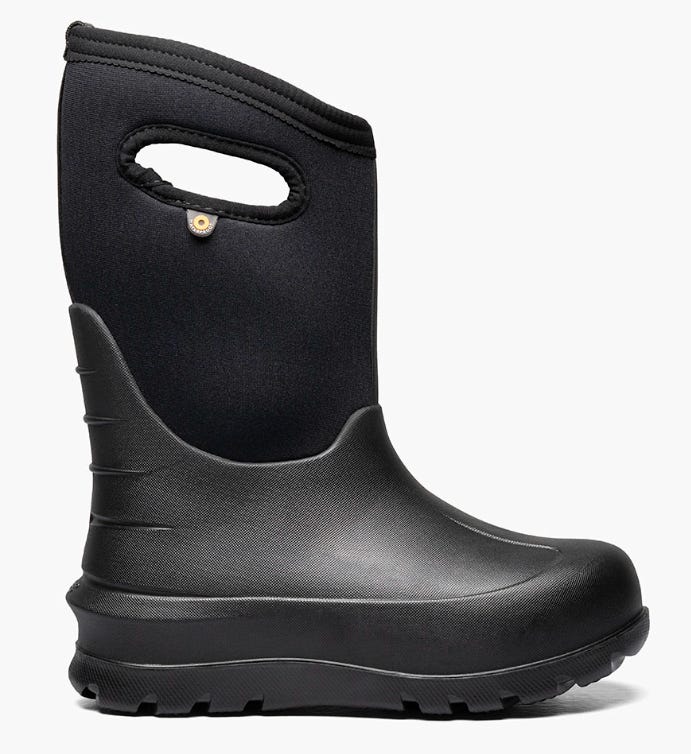
A warm core goes a long way to happiness! If I have to pick something more weather-proof, I’ll go with BOGS Neo-Classic Solid Kids’ 3-Season Boots. I always got them for my kids. When my older son’s feet were the same size as mine, I threw them on one day and have been wearing hand-me-down kid BOGS ever since.You can just step right into them and walk out the door into the snow and keep your feet warm and dry.
Kim’s Whims
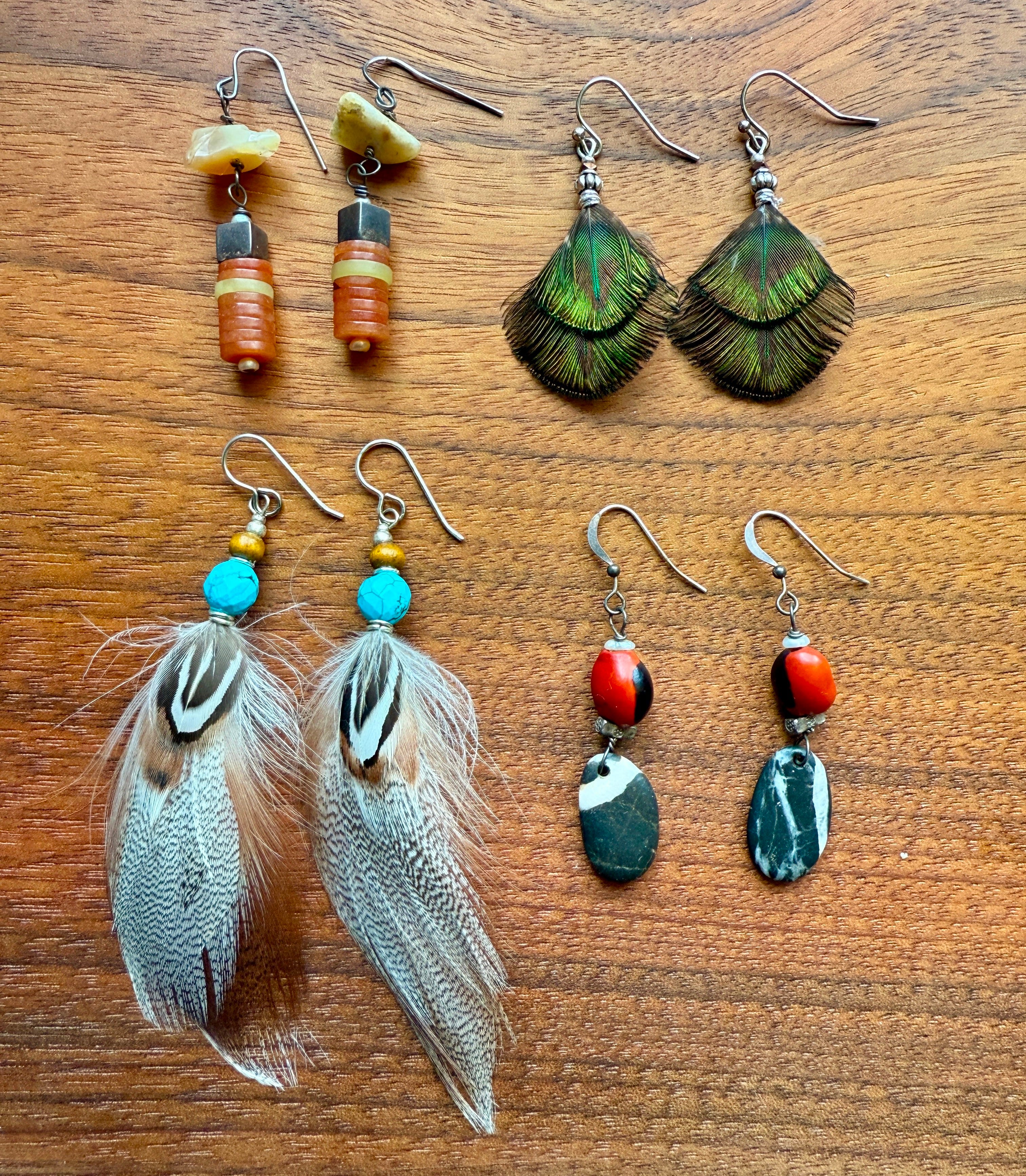
This is the spot where I share some random thing that brings me joy. This month, ignoring the big-box stores and shopping from indie makers. Some of my favorie earrings (below) are made by two good friends. Everything they make is one-of-a-kind. The feather earrings are by Angela Marie, a Boise-based artist whose small business, Birds of a Feather, you’ll find only on Instagram and at select craft markets. (She ships and does custom designs.) The beaded pairs are by Pulitzer Prize-winning photographer Alysia Burton Steele, who makes jewelry as a way to de-stress from her primary work as a historian, photojournalist, and writer covering civil rights. You can shop her selection on Instagram and Etsy at Al’s Side Hustle. Maybe someone on your Christmas list would love a pair!
Hi Kim! I so relate to your post about being an adventure writer! I tried to break into Outside and finally did a few years ago. Kudos for bringing up the boys’ club bias.
Kim! Thanks so much for the Geezer love. Fantastic post and thank you for shining a light on the neglected Virginia Kraft.